Poverty is the worst form of violence.” — Mahatma Gandhi
In May 2026, a mathematics teacher named Michael Oyedokun was murdered in rural Nigeria.
He was pulled from a school. He taught algebra and geometry — the precise disciplines that nations like China and India elevated to strategic national priority, building export-driven economies that lifted hundreds of millions out of poverty within a generation. The men who killed him had no jobs, no capital, no future the formal economy had bothered to offer them. They found purpose in the only market that would have them.
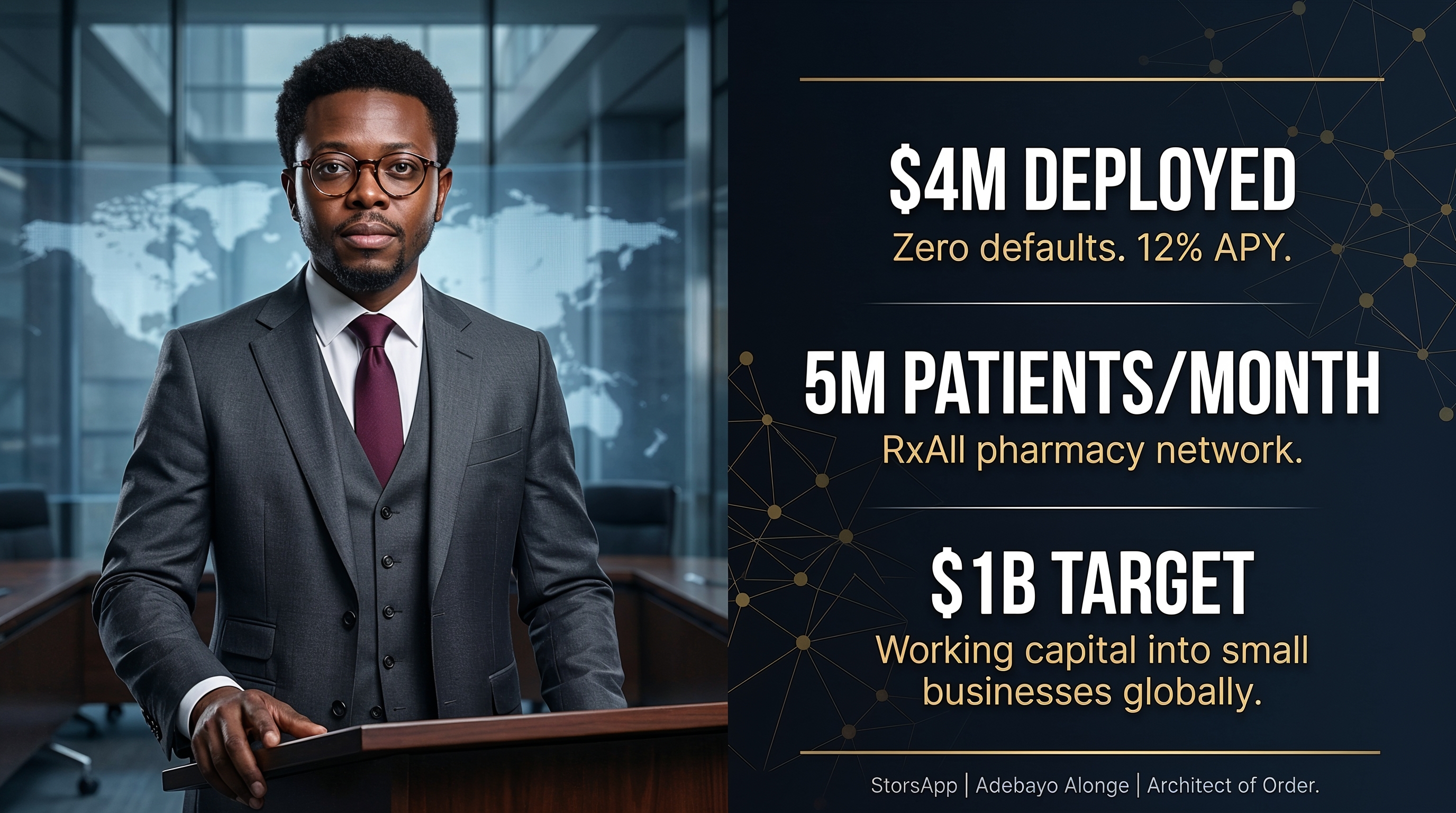
I am not writing this post from a safe distance. I run companies in the markets where this happens. I serve five million patients monthly through pharmacies in communities where the formal financial system has decided the risk of lending is too high and the return is too low. I know what financial exclusion looks like from the inside.
It does not look like a data point. It looks like Michael Oyedokun.

Financial Exclusion is A Security Crisis
Most people treat financial exclusion as an economic problem. It is a security crisis.
The standard development economics framing goes like this: there is a credit gap for small businesses; we need better products; we need more capital; we need enabling regulation. All of that is true. None of it is sufficient.
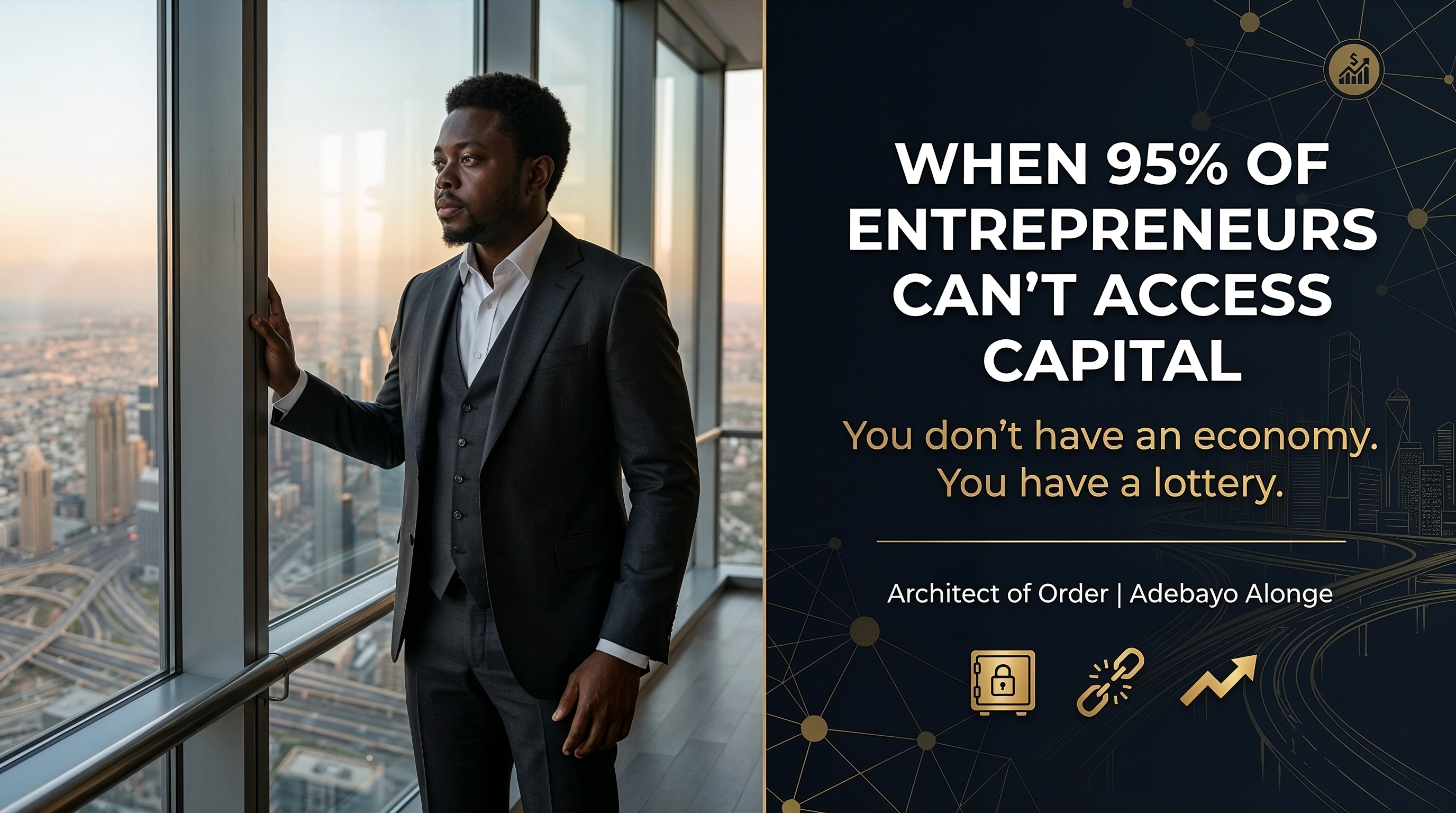
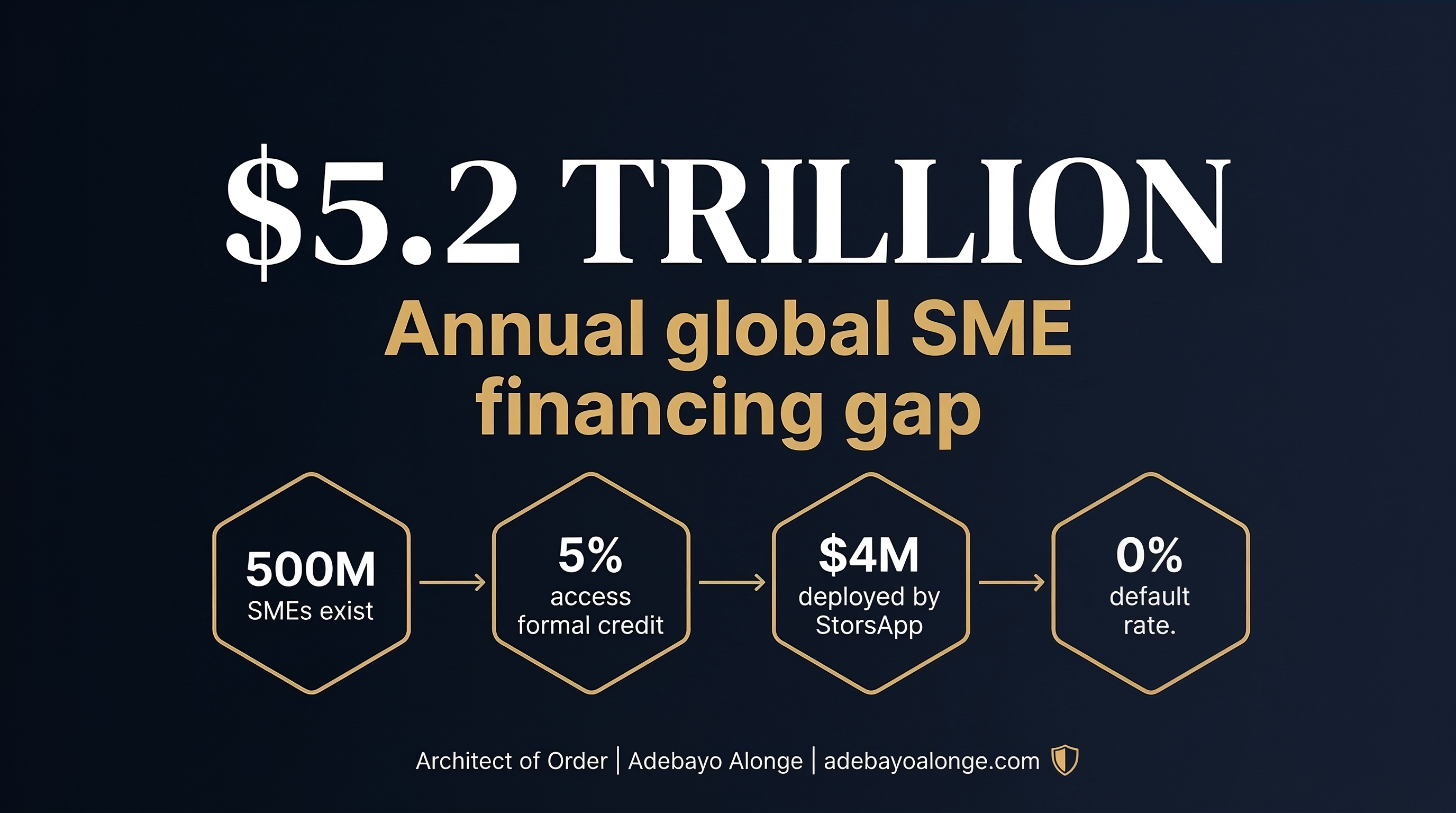
Because it misses the core systemic logic. When 95% of the world’s 500 million small and medium-sized enterprises cannot access formal credit — when the International Finance Corporation estimates the global SME financing gap at $5.2 trillion annually — what you have is not a market inefficiency. You have a governance failure of historic proportions. And governance failures, when they persist long enough, produce violence.
The connection is direct. Not metaphorical. Not theoretical.
Societies with high levels of financial exclusion do not produce stable outcomes. They produce excluded populations with no stake in the system, no investment in its preservation, and no economic future to protect. That is the foundational condition for radicalization. For organized crime. For the kind of asymmetric violence that makes a short journey on a highway from one city to another in frontier markets feel like a gamble with your life. By whose hand will you die today – a trigger happy bribe seeking police man or a maddened terrorist who would take your life if you are the wrong religion or cannot pay your ransom or armed highway robbers looking for the next easy money. This is not fiction. It is daily reality for millions across frontier markets who go place to place trying to make a living.
This is what financial exclusion costs. Not just the businesses not built. The people not reached. The stability not maintained.
How We Fix This
There are six things builders and policymakers must do if they are serious about treating financial inclusion as the security architecture it is.
A. Reframe the risk calculus. The argument that small businesses in emerging markets are too risky to lend to is not an analysis. It is a default. At StorsApp, we have deployed over four million dollars into small businesses with zero defaults and twelve percent APY returns to investors. The risk is not in the businesses. The risk is in the assessment methodologies inherited from systems designed for a different market. Build new methodologies or accept the instability that comes from refusing to.
B. Use AI to unlock the data that banks ignore. Formal credit scores exclude billions of people who have rich, verifiable financial histories — in mobile money transactions, inventory turnover, supplier payment records, customer receipts. The infrastructure to assess creditworthiness exists. The willingness to use it has been the missing variable. AI-powered alternative credit scoring changes that calculus in months, not decades.
C. Structure capital as investment, not charity. Development finance that arrives as grants distorts markets. It creates dependency, undermines local financial systems, and disappears when the political winds shift. Structured lending at fair rates — with returns, with accountability, with loss mechanisms that keep everyone disciplined — builds permanent infrastructure. StorsApp’s model returns twelve percent APY to investors while funding businesses the traditional system abandoned. That is not charity. That is architecture.
D. Align the security establishment with the development community. Defense ministries model threats. Finance ministries model growth. Neither is modeling the direct relationship between financial exclusion and instability. Close that gap. Commission the research. Speak the same language. The national security budget and the financial inclusion budget are funding the same problem from opposite ends.
E. Protect the nodes. The mathematics teacher who was killed was not just a person. He was a node — a point of knowledge transfer in a system designed to build the next generation of engineers, doctors, and founders. Every teacher in an underserved community, every pharmacist in a rural market, every small business owner in a forgotten district is a node in the architecture of stability. Protect them. Fund the systems that support them. Understand that their security and the security of the societies around them are the same thing.
F. Move faster than the instability. Violence does not wait for five-year development plans. Radicalization accelerates when exclusion is acute. The response must match the pace of the problem. That means deploying capital now, building lending infrastructure now, scaling platforms now. Not in the next planning cycle.
What You Can Do Today
If you manage capital — as a fund manager, a family office, an institutional investor — ask one question before your next allocation decision: what percentage of my portfolio reaches businesses that the traditional financial system has excluded?
If the answer is zero, you are not just missing returns. You are part of the architecture of instability.
StorsApp is building toward deploying one billion dollars in working capital into small businesses globally over the next five years. We are looking for asset managers, wealth advisors, and high-net-worth investors who understand that patient capital deployed into excluded markets is not philanthropy. It is the most defensible long-term investment thesis in a world where instability is the primary risk premium.
The opposite of financial exclusion is not a better credit product. It is a society with a stake in its own future.
The mathematics teacher deserved to live in one.
Onwards.
Adebayo Alonge is Founder & Group CEO of RxAll Group. A Harvard Kennedy School Mason Fellow, Yale School of Management alumnus, and MIT Legatum Fellow, he builds AI-powered platforms that deliver healthcare, capital, and clean energy to underserved markets worldwide. He has raised $11M+ from Tier 1 VCs, driven $180M+ in product sales, and serves five million patients monthly. He is a Fast Company World Changing Ideas 2025 honoree and winner of the Hello Tomorrow DeepTech Prize.
#FinancialInclusion #AIGovernance #DeepTech #GlobalLeadership #StorsApp
Discover more from Adebayo Alonge
Subscribe to get the latest posts sent to your email.

