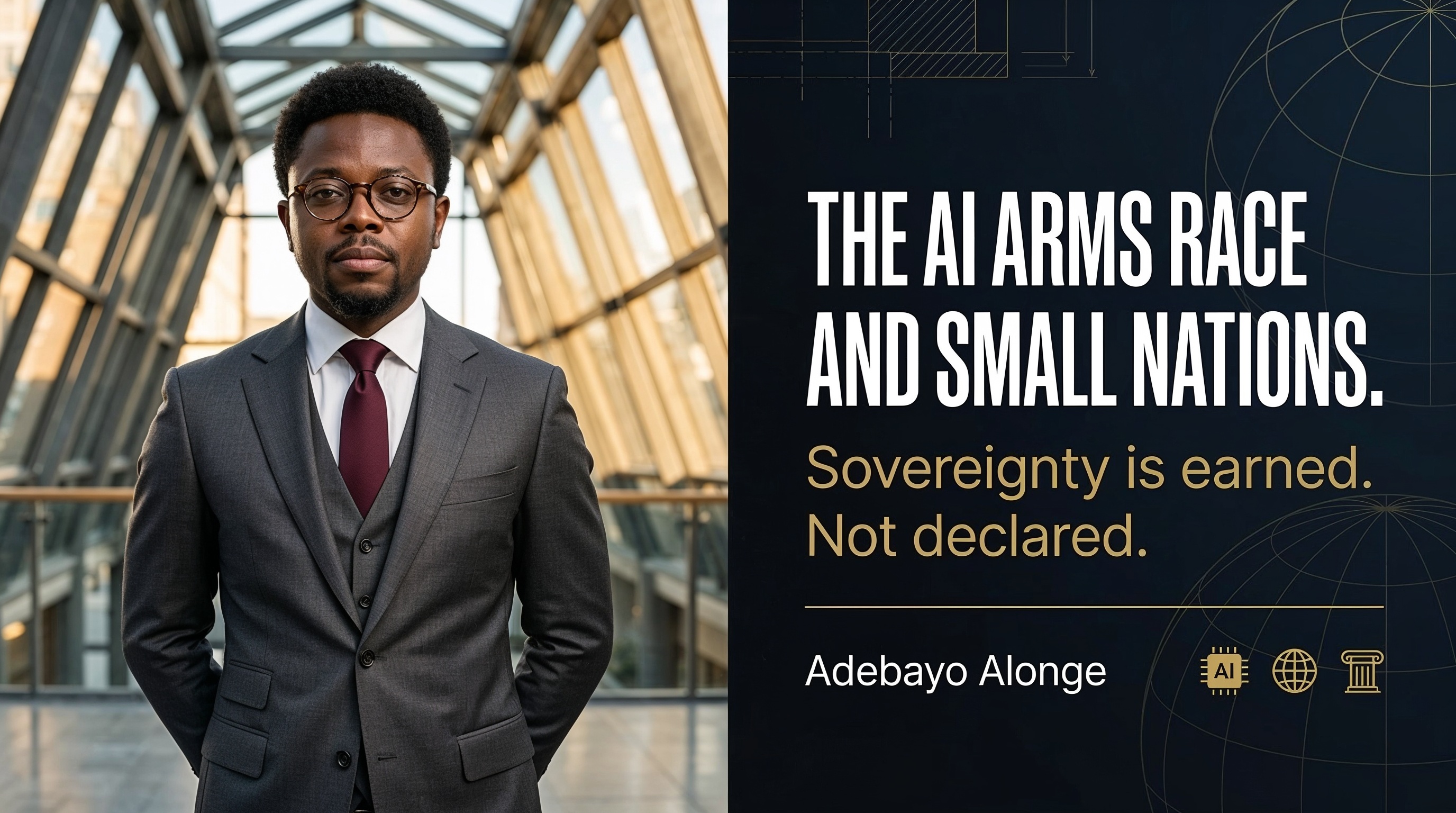
Order is never self-sustaining. It must be maintained by those willing to invest in it.
The AI Arms Race is On
The numbers tell a story that no speech at the United Nations can rewrite.
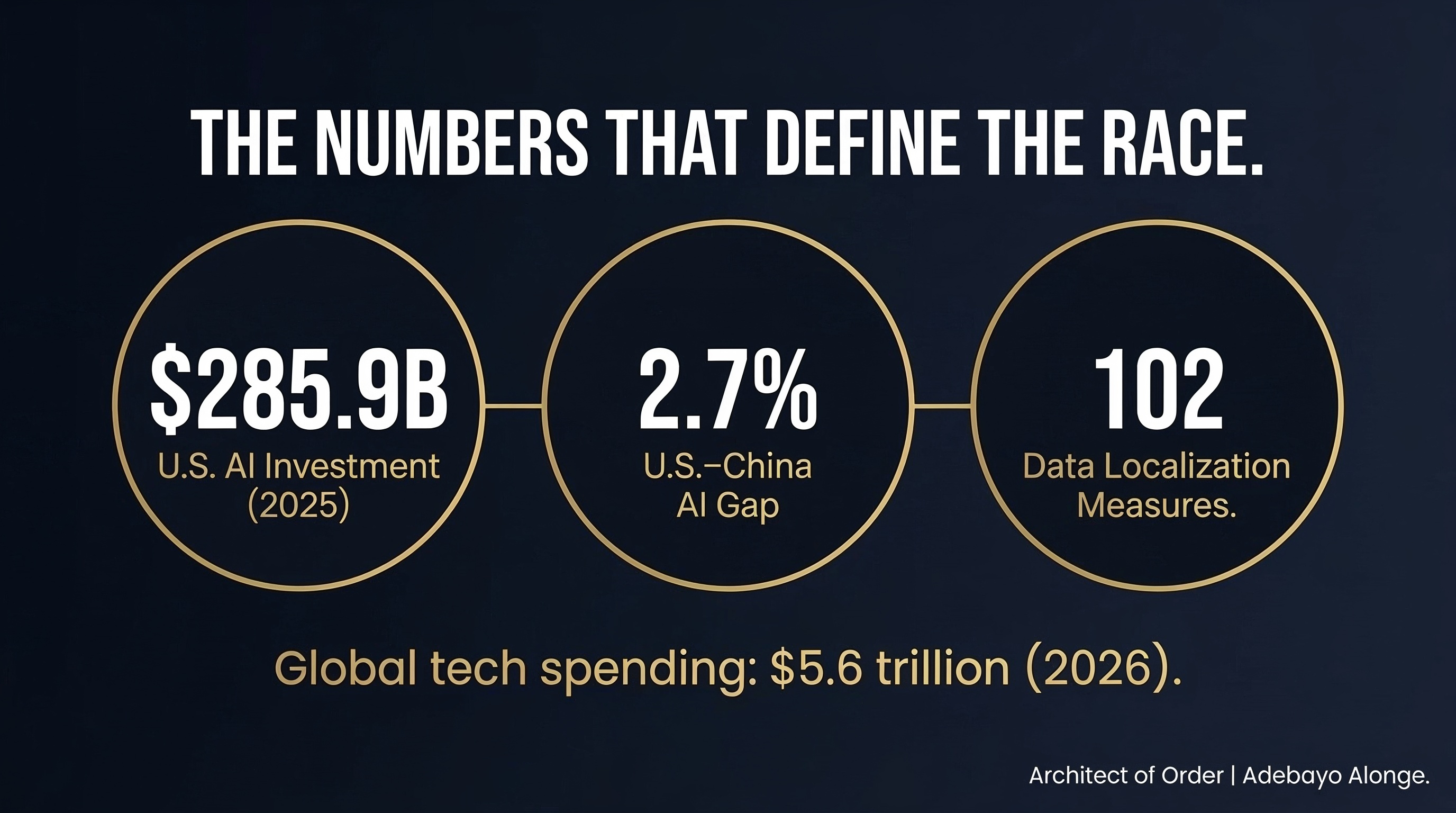
Global technology spending will reach $5.6 trillion in 2026. The United States poured $285.9 billion in private AI investment in a single year — more than twenty-three times China’s total. Four American companies alone committed $320 billion to AI infrastructure. And the performance gap between leading U.S. and Chinese AI models has shrunk to 2.7 percent.
This is no longer a theoretical competition. It is an operational arms race — and it is accelerating at a pace that most governments cannot match, let alone regulate.
Yet across the halls of the UN General Assembly, in the diplomatic salons of Geneva, and in the policy workshops of Addis Ababa, small nations continue to demand a seat at the table. They should have one. But a seat without preparation is decoration.
Small Nations Are Not Ready for AI Sovereignty
I learned this firsthand.
Last fall at the UN General Assembly, I watched as delegations filed in and out of session deliberations. The Nigerian delegation was large and flamboyant — one of my Western colleagues turned to me and asked why they seemed more concerned with their looks and presentation than substance. His eyes were on Lamido Sanusi, the former Emir of Kano and former Central Bank Governor — a man I have known personally for over twenty years. In fact, he came to speak at the University of Ibadan at my invitation while he was still the First Bank MD, before going on to lead the Central Bank of Nigeria, and was extraordinarily generous to me and my peers. I was caught between loyalty and honesty.
I chose silence. Some fights are not worth having in the wrong room.
Later that evening, I sat at dinner in one of New York’s private hotels with this same Westerner — a billionaire whose name I will not share — and his circle. The conversation turned to data sovereignty. Several smaller nations had been vocal that week about controlling their citizens’ data. The table erupted.
How can nations without a single major data company demand sovereignty over data they cannot store, process, or protect? Can they not focus on the basics first — data laws, localized data centers, licensing agreements with the global platforms? How do you claim sovereignty over something you have no operational control over?
I was stunned. One part of me wanted to defend the ambitions of these smaller nations. But I stayed quiet. Because they were, in fact, speaking a difficult truth.
Demanding sovereignty before building capacity is like declaring independence before training an army. The declaration is real. The power behind it is not.
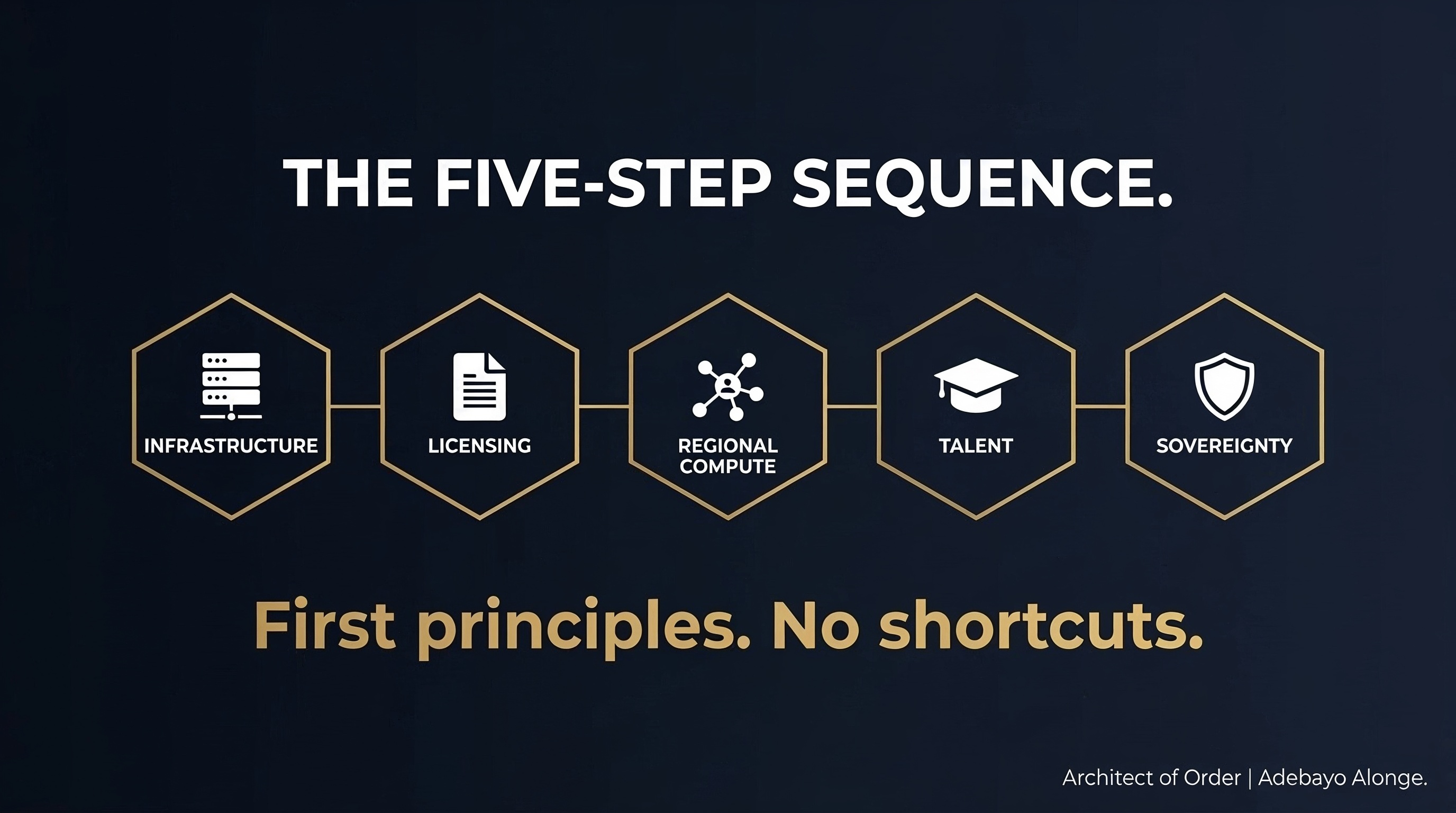
How Small Nations Can Be Ready
Small nations must approach data and AI strategy the way resource-rich nations that have succeded such as Saudi Arabia and Norway approached oil and minerals. First principles. No shortcuts.
A. Build data infrastructure before declaring data sovereignty. Invest in localized data centers, regional compute clusters, and cloud partnerships with enforceable governance terms. Between 2018 and 2025, Europe expanded state-backed AI supercomputing clusters from three to forty-four. Sub-Saharan Africa, South Asia, and Latin America combined have built fewer than fifteen. The gap is not rhetorical. It is architectural.
B. License before you legislate. Saudi Arabia, Norway, and the UAE understood this sequence. Control the resource first. Monetize it next. Then declare sovereignty from a position of operational strength. Data localization measures have risen from five in 2017 to one hundred and two in 2025 — but legislation without infrastructure produces compliance theater, not actual protection.
C. Pool compute resources regionally. No single small nation can build frontier-scale infrastructure alone. But regional compute alliances — shared GPU clusters, joint data governance frameworks, pooled training capacity — can close the gap. The World Economic Forum’s January 2026 white paper on AI sovereignty argued exactly this: sovereignty is not autarky. It is strategic interdependence.
D. Invest in AI talent before importing AI products. AI engineering skills are accelerating fastest in the UAE, Chile, and South Africa. These nations are building the human capital that turns infrastructure investment into national capability.
E. Engage the EU AI Act framework as a governance template — not a compliance burden. On August 2, 2026, the EU AI Act’s core enforcement powers activate. Transparency obligations, conformity assessments, penalties up to thirty-five million euros or seven percent of global revenue. This is not just a European regulation. It is a global governance architecture. Small nations can adopt and adapt it rather than building from scratch.
What Small Nations Can Do Today
At RxAll, we have built AI-powered pharmaceutical authentication serving over five million patients monthly across ten countries. We did not wait for perfect regulation. We built systems that work, then engaged regulators to adopt standards based on what we proved in the field.
That is the model. Build capacity. Demonstrate results. Then negotiate from strength.
The AI arms race will not pause for nations that are not ready. It will not wait for speeches, resolutions, or committee reports.
Sovereignty without infrastructure is a speech. Infrastructure without sovereignty is a surrender.
Build both. Build them in the right order. Build them now.
Onwards.
Adebayo Alonge is the Founder and Group CEO of the RxAll Group. A Harvard Kennedy School Mason Fellow, Yale School of Management alumnus, and MIT Legatum Fellow, he builds AI-powered platforms that deliver healthcare, capital, and clean energy to underserved markets worldwide. He has raised $11M+ from Tier 1 VCs, driven $180M+ in product sales, and serves over five million patients monthly. He is a Fast Company World Changing Ideas 2025 honoree and winner of the Hello Tomorrow DeepTech Prize.
Discover more from Adebayo Alonge
Subscribe to get the latest posts sent to your email.

