IEEE Spectrum: Why Small AI Models Could Power Health Care Where Big Tech Cannot

The future of AI relies on small, precise models used at the edge, as highlighted by IEEE Spectrum. These models, like the RxScanner Lite, are crucial for providing services in areas with limited resources. With the potential to transform healthcare and agriculture, small AI may reach more people than larger models, despite underlying infrastructure challenges.

I Am an Immigrant. America Did Not Owe Me Anything. I Built Anyway.


The author, an immigrant from Nigeria, reflects on their successful entrepreneurial journey in America, highlighting opportunities for innovation and growth. They emphasize that the U.S. allows anyone, regardless of background, to turn ideas into reality. Celebrating independence, they honor fellow immigrants and builders for their contributions to the American Dream.

What the Global South Teaches Silicon Valley About Deploying AI Responsibly


The World Bank warns that the AI revolution could exacerbate inequalities between rich and poor countries, as poorer nations struggle to benefit from AI advancements. Adebayo Alonge emphasizes the need for "small AI," tailored to local contexts, advocating for precision in development and funding to adequately support impactful applications that save lives.

RxAll Group — Why I Build in Parallel, Not in Sequence


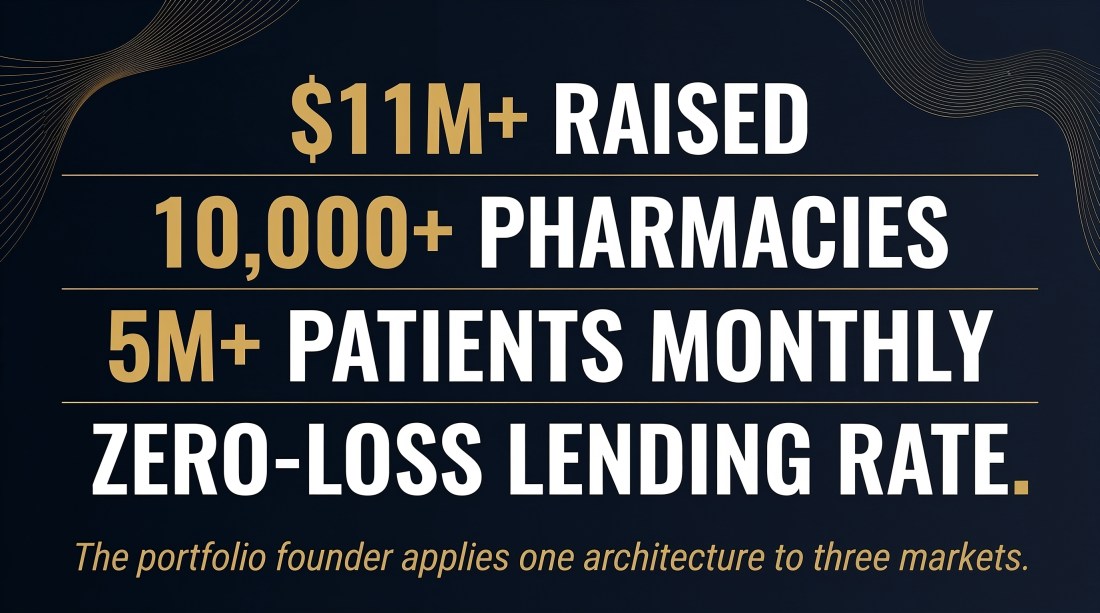
The author challenges the notion that speed and distance are opposites, advocating for a unified approach to tackling systemic issues like counterfeit drugs, financial exclusion, and energy poverty. By sharing resources across ventures, the author demonstrates how diverse projects can coexist under a single trust architecture, leading to significant impact and financial success.

From Single Product to Pharmacy Workflow AI Automation Infrastructure — How Listening to 100 Users Changed Everything


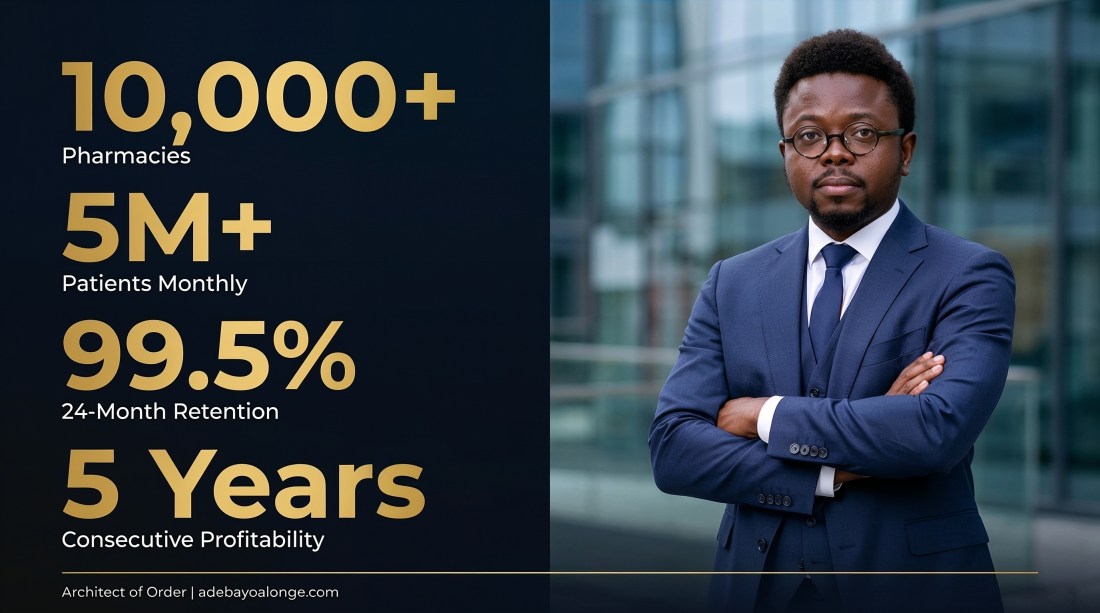
In 2016, Adebayo Alonge founded RxAll, initially developing an AI-powered spectrometer to combat counterfeit medications. Despite early struggles, a pivot during COVID-19 turned RxAll into a comprehensive pharmacy workflow platform, enhancing success and profitability. By addressing pharmacies' operational needs, adoption surged from 5% to 92%, solidifying their market presence.

Not All Money Is Good Money — Why I Walked Away from $10M in 2025


I walked away from ten million dollars because the cost of staying was higher than the cost of leaving. Capital that compromises your governance is not investment. It is a hostile takeover disguised as a handshake. Not all money is good money. Some money costs far more than it pays.

Trust Is Infrastructure — Why the Most Important System You Can Build Is Credibility


Trust is a system that can be structured for effectiveness, yet institutions are struggling with public skepticism. Compliance-driven approaches fail to address underlying trust issues. Successful solutions redesign systems for transparency and verification, improving adoption and building credibility. The future favors those who establish robust trust architectures over mere reputational marketing.

The AI Governance Gap — Why Algorithms Need Conscience, Not Just Compliance


The EU AI Act, enforcing significant penalties for noncompliance, seeks to regulate high-risk AI systems, emphasizing moral governance alongside technical compliance. While necessary, this framework lacks moral architecture, risking harm despite adherence to rules. Builders must prioritize community needs to ensure AI systems serve and do not exclude vulnerable populations.

The Rules-Based Order Is a Noble Fiction


The author argues that true power requires both moral clarity and enforcement to protect vulnerable populations. Reflecting on personal experiences and historical lessons, they emphasize the chaos that arises in the absence of a strong hegemony while advocating for an American-led world order as a means of survival and stability.

AI Could Run Africa Better Than Politicians


The author reflects on Nigeria's past, highlighting the decline in living standards due to reduced government oversight after 1999. Suggesting a revival through AI in governance, they propose essential services remain public, create government-owned companies, improve transparency, and empower youth leadership. The aim is to rebuild the middle class and enhance accountability.