
Order is not a pressure imposed upon society from without, but an equilibrium which is set up from within.” — José Ortega y Gasset
I read Between the World and Me in four hours.
It is a letter from a father to a son. It is about the body — the Black body in America — and how that body is never fully safe. Not from the state. Not from the street. Not from history.
I agree with most of it.
I agree that staying alive is the first duty. I agree that there is no consolation waiting on the other side of this life to make the loss even. Coates refuses that comfort. The body and the soul are one thing. When the body goes, everything goes.
That is not a sad idea. That is an urgent one. It means safety is not a spiritual question. It is a question of what we build, and of what we love.
And that is exactly where the book stops.
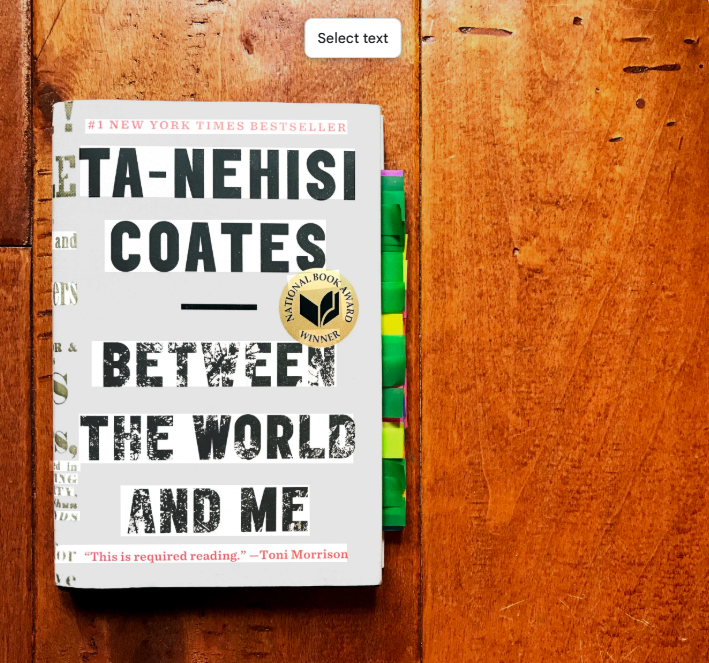
A brilliant book that will not land
The writing is beautiful. The reading is easy. But the book moves. It touches slavery. It touches schools. It touches the police. It touches Paris. It touches memory. It circles and circles and rarely lands.
One section lands hard.
Prince Jones.
The fact the book walks past
Prince Jones was a Howard student. On 1 September 2000, an undercover officer followed him for about fifteen miles across two states and into Virginia. Jones was unarmed. The officer fired sixteen rounds. Six hit him. Five hit him in the back. No criminal charges were filed.
Coates makes this the emotional centre of the book. He is right to. It is the moment the argument becomes a person.
But there are facts inside that story that the book walks past.
The officer, Carlton Jones, was a Black man. The department was Prince George’s County — a majority-Black county with a Black-led government and a Black-led police force. And Carlton Jones had himself passed through Howard University, some years before Prince Jones arrived. Two Howard men. One killed the other.
Coates does not mention it.
That silence is the missing chapter. Because if the danger came only from white power, then Prince Jones should have been safest exactly where he died — in a county run by his own people, policed by his own people, patrolled that night by a man who had walked the same campus.
He was not safe there. He was killed there.
So the question the book never asks is the only question that leads anywhere: what failed?
Two things failed. One is a machine. The other is a heart.
The first failure ▸ Design
I write this as an outsider. I am not African-American. I am African. And I have spent fifteen years building systems inside institutions staffed, led, and owned by people who looked exactly like the citizens they failed.
I know that failure intimately, because it is my own house.
Across our continent we have hospitals with no medicine while the men who run the health ministry fly abroad for their own treatment. We have oil revenues that vanish between the wellhead and the budget. We have officials who send their children to schools in London that they would never fund at home. None of that was done to us by a colonial officer. It was signed by men who share our names and speak our languages.
Putting our own people in the building does not make the building work.
When my company began authenticating medicines, adoption sat at 40 percent — inside pharmacies run by the very communities they served. We did not fix it with better technology. We fixed it by redesigning who answered to whom, and how that answer was checked. Adoption moved to 92 percent across more than 10,000 pharmacies.
Representation puts people in the room. Governance decides what happens in the room.
Those are two different things. Coates writes as though only the first one exists. So do most of our leaders.
The alibi ▸ Two continents, one evasion
I am tired of blaming all of it on colonialism.
Colonialism happened. It was brutal, it was extractive, and its damage is still measurable. I do not dispute one line of that history. But sixty years on, it has become the standing excuse for every stolen budget and every collapsed clinic. It explains the wound. It does not explain the theft.
Coates does the same thing with slavery. It is the ground of the book, the origin of every harm, and by the final page there is nothing left for anyone Black to do but survive and remember.
Slavery is America’s alibi. Colonialism is ours. Both are true. Neither is a plan.
Self-healing starts with accountability. It does not start anywhere else. Not with reparations, not with recognition, not with a better speech at the United Nations. It starts the day a people decide to hold their own leaders to the standard they demand of strangers.
The second failure ▸ Love
Because under every broken system is a broken regard. You do not audit your way out of that. You do not legislate your way out of it either.
Here is the plain version. You do not destroy what you love.
A leader who loots the hospital does not love his people. A commissioner who signs off on a road that washes away in one rainy season does not respect the men who will drive it. You do not burn the house you love. You do not rob the shop you love. You do not shoot the boy you love.
When a community harms itself at scale, something upstream of policy has already given way. It is not slavery. It is not colonialism. It is the value the community has placed on its own life.
That is a moral fact, and it must be said plainly, because the people best positioned to say it keep declining to.
Look at what gets celebrated. The music that sells best is often the music that boasts about the shooting. The corner is glamorised. The gun is a lyric. The dead man is a punchline in someone’s verse. Culture is not decoration around a community. Culture is enforcement. What a people honour, they produce more of. What a people make shameful, they get less of. That is not sentiment. That is a control system, older than any statute.
Then there is the word.
Nigger!
There is a word that was engineered — deliberately, over centuries — to turn a man into property and make his suffering ordinary. It is now printed on merchandise, sung to children, and defended as affection. I have heard every version of the reclamation argument. I am not persuaded. A people who have been told they are less do not become more by repeating it to each other for profit. Language is the first place a community either raises or lowers itself.
And the last thing, the hardest thing: the world does not owe you love.
Anti-Black prejudice is not an American invention and it is not a white monopoly. It is present in South Asia, in the Gulf, in East Asia, in Europe, and on our own continent, where we sort and diminish one another by tribe with real enthusiasm. Waiting for the world to correct its heart is not a strategy. It is a delay.
So the perimeter has to be built inward first. Not because the outside is fair. Precisely because it is not.
What a serious argument would add
A. Retire the alibi. Teach the history in full. Then stop using it as the answer to every question. History explains the hole. It does not fill it.
B. Name the whole system. The state harms. That is documented. So does every institution operating without a working check — including the ones we celebrate as ours. Say both.
C. Separate representation from governance. A Black mayor is a fact. A functioning use-of-force review board is a mechanism. A minister who looks like you is a fact. An audit he cannot bury is a mechanism. Facts feel like progress. Mechanisms produce it.
D. Hold our own institutions to the standard we demand of theirs. Prince George’s County had a Black government and a documented pattern of shootings. Half our ministries have a budget and no published accounts. Saying so is not betrayal. It is the beginning of repair.
E. Guard the culture. Make it shameful to celebrate killing your own. Not just illegal — shameful. A community that will not police its own honour code has outsourced its safety to people who do not love it.
F. Retire the word, nigger. Stop selling back to our children the vocabulary built to break their grandparents.
G. Build the inside perimeter first. No community wins a fight outside while it is losing one inside. Safety is built inward before it is demanded outward.
H. Write the prescription, not only the diagnosis. Coates tells his son he must be awake. Awake to what end? A boy told the world will hurt him, and never told what to build, becomes an adult who can name the wound and nothing else.
If you write about power, do not stop at who holds it. Name the mechanism that would make it answerable, and the person meant to pull the lever. Then name the value that mechanism protects — and say out loud who is failing to honour it.
What You Can Do Today
Diagnosis without prescription is not courage. It is exhaustion dressed as literature.
A people cannot demand safety from the world while withholding it from each other. Make the house safe. Then face the world together — with a face the world cannot argue with.
Governance is what love looks like once you build it into a system.
And you do not destroy what you love.
Onwards.
About The Author
Adebayo Alonge is Founder and Group CEO of RxAll, StorsApp, and Frontières Bay Energies. He is an AI and DeepTech pioneer whose platforms serve over 5 million patients monthly across more than 10,000 pharmacies, with $11M+ raised from Tier 1 investors and five consecutive years of profitability. A Harvard Kennedy School Mason Fellow, Yale School of Management graduate, and MIT Legatum Fellow, he was named a Fast Company World Changing Ideas honoree in 2025 and won the Hello Tomorrow DeepTech Prize. He writes the Architect of Order newsletter.
Discover more from Adebayo Alonge
Subscribe to get the latest posts sent to your email.

