Ten years ago, at Yale, I called myself a Pan-Africanist.
I wore the colors. I spoke the big words. I turned down a quant finance job in New York because I wanted to “go back and build Africa.”
I went home proud. I thought: “We are poor because of colonialism. Because of the West. Because of the system.”
That story felt good. It made me the hero. It made someone else the villain.
Years later, after building businesses across Africa and seeing Africans for who they truly are, that story broke in a classroom at Harvard.
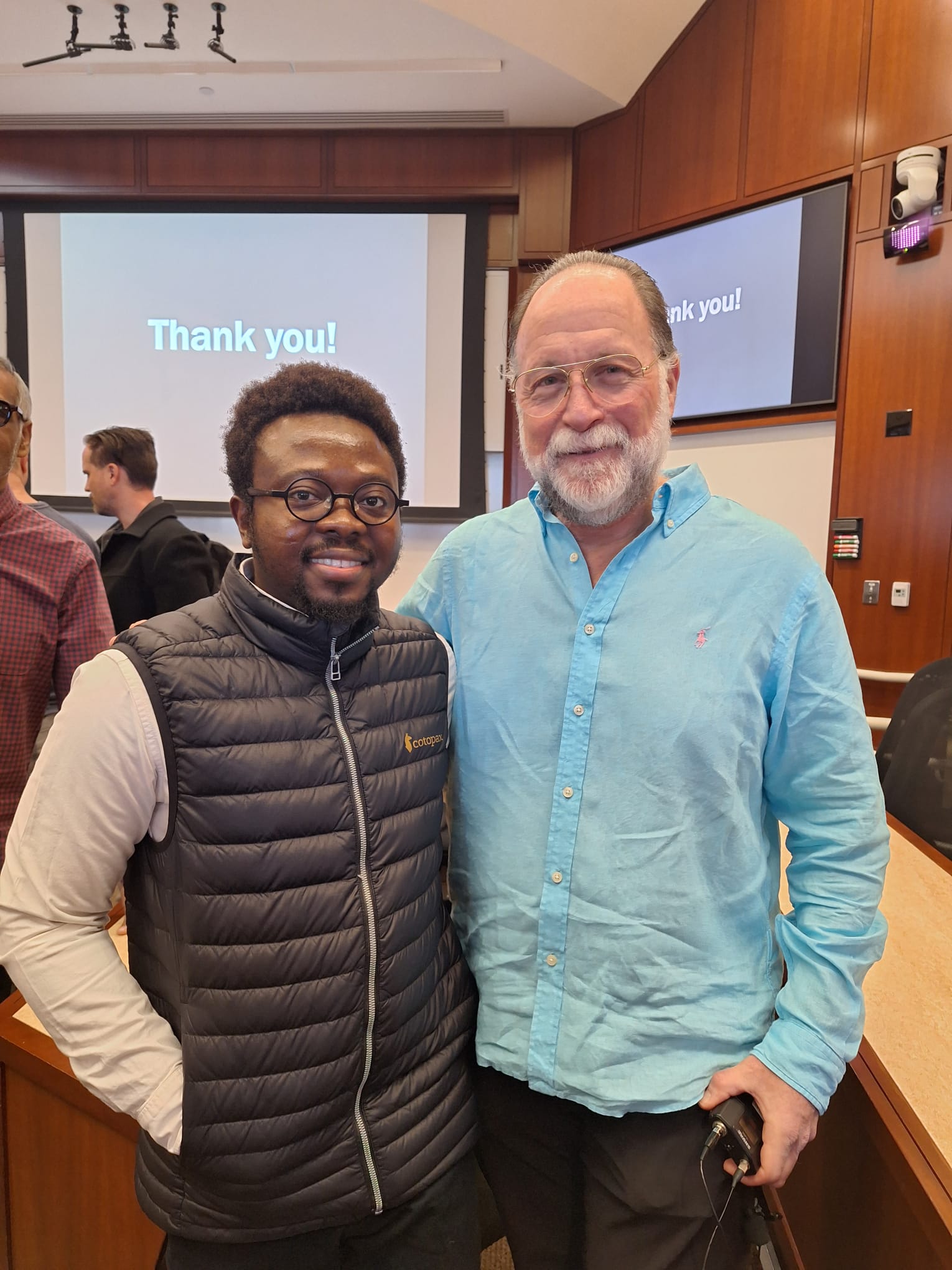
The Class That Shook My Faith
At Harvard, I took a course by Prof. Ricardo Hausmann:
“Why Are So Many Countries Poor, Volatile, and Unequal?”
I walked in with my chest out and my old story in my head.
- “Colonialism made Africa poor.”
- “Once we add value to our raw materials, we’ll catch up.”
- “The main problem is what others did to us.”
Prof. Hausmann didn’t attack my story. He just showed the data.
Charts. Maps. Time series for 2,000 years. Africa. Europe. Asia. The Americas.
Slowly, the numbers forced me to face truths I did not like.
Hard Truth #1: Africa Was Already Behind Before Colonisation
The first shock:
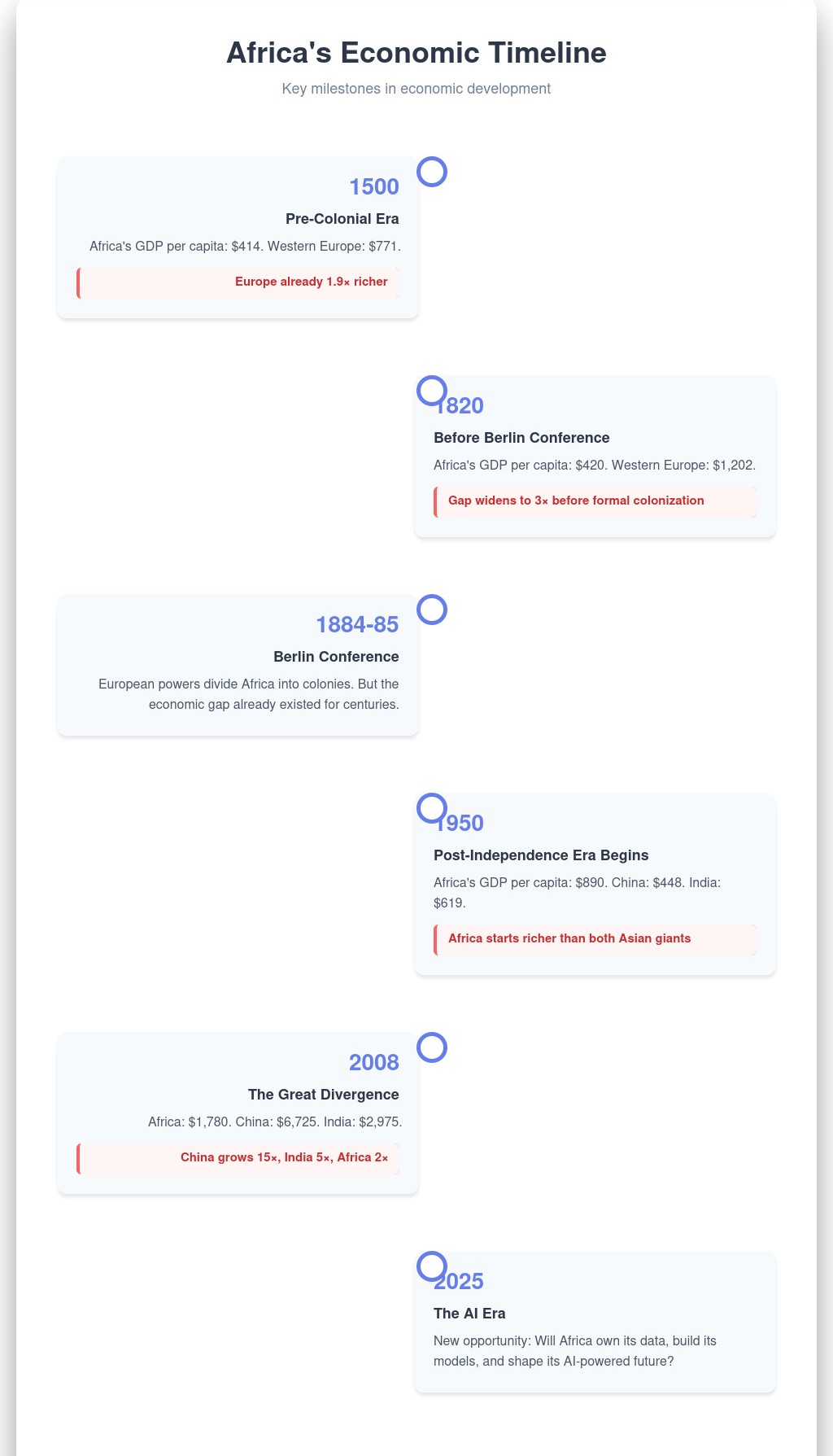
Africa was already behind in economic development centuries before the Berlin Conference of 1884–85.
Economic historians use a big dataset called the Maddison Project. It estimates GDP per person for world regions over the last 2,000 years (in “1990 international dollars” so we can compare across time).
Look at this simple table:
500 Years of Divergence in One Table
GDP per person – Africa vs Western Europe (1990 international dollars, Maddison data)

What does this mean in plain language?
- For almost 1,800 years, Africa’s income per person is flat. It stays around $400–500.
- Around 1500, Western Europe is already almost twice as rich per person as Africa (about $770 vs $410).
- By 1820, before Africa is cut up in Berlin, Western Europe’s income per person is nearly three times Africa’s (about $1,200 vs $420).
- By 1870, just before formal partition, Europe is close to four times richer per person (about $1,960 vs $500).
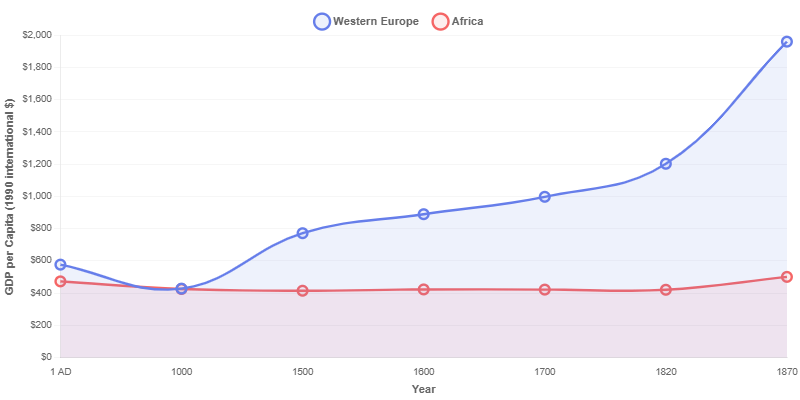
So yes, colonialism was brutal and unjust. But the income gap did not start in 1884.
The line for Africa is flat. The line for Western Europe bends up from 1500 onward.
The divergence is centuries old.
Hard Truth #2: The Present Looks Like Europe’s Distant Past
More recent research goes deeper.
Economists Broadberry & Gardner compare modern African economies to Europe’s past. They find:
- The poorest African economies in 2008 had income levels similar to England in the 11th–14th centuries.
- Middle-income countries like Ghana in 2008 looked like Britain in 1700.
- Even relatively richer countries like South Africa were only near UK levels around 1913.
In other words:
Many African countries today live at income levels that Europe passed hundreds of years ago.
So when I say Africa is “500 years behind” in economic development, this is not a slogan. It is a rough description of what the data shows.
Hard Truth #3: Slave Trade Broke Trust – and Trust Is the Basis of Wealth
The data also shows that:
Regions in Africa that suffered more slave trade are today more fragile and volatile.
Why?
Because slave trade did more than steal people. It broke trust inside communities.
When your neighbour can sell you, or your child, into slavery, something deep breaks:
- People stop trusting one another.
- They fear to share information.
- They are less willing to invest together.
- Networks become weaker.
But trust is the hidden engine of growth.
You need trust to:
- Sign contracts
- Form firms
- Combine skills
- Build strong institutions
Where trust is broken, growth is slow.
We are still living with the shadow of that broken trust. And with the rise in jihadism and kidnappings across key Africa regions, it will take centuries for Africans to learn to trust one another and build together.
Hard Truth #4: Where Settlers Stayed, Institutions Grew
Another uncomfortable finding:
Areas in Africa with high European settlement often have higher GDP per person and stronger institutions today.
Why might this be true?
Because where settlers planned to live long term, they pushed for:
- Better roads and ports
- Schools and hospitals
- Courts that protect property
- Rules that let markets work
This does not excuse the violence of colonialism. It does not mean Africans cannot build strong institutions.
But it forces a hard question:
Who is willing to commit their life, their family and their capital to building Africa for the long term?
We need more long-term builders, African and non-African, who say:
“My future is tied to this place. I will stay. I will build. I will defend good rules.”
Not hit-and-run extraction. Not fly-in, fly-out charity.
Hard Truth #5: War Erases Centuries in a Few Years
War is one of the biggest destroyers of growth.
Each conflict:
- Destroys roads, power lines and buildings
- Shuts schools and hospitals
- Pushes skilled people to flee
- Scares away investors
One war can erase 100 years of slow progress.
Africa has had too many wars and too many coups. Each one pushes us back. Then we start again from a deeper hole.
If we are serious about development, we must be serious about peace. Not in slogans. In budgets, training, and political choices.
Hard Truth #6: Colonialism Alone Cannot Explain the Gap – Just Look at China and India
There is one more hard lesson the data teaches.
Colonialism hurt. It was brutal. It helped the West grow. But other places that were also colonised and looted – like China and India – have since taken off. Africa has not.
Using the same Maddison data, we can add China and India to our table. These numbers are also in 1990 international dollars, so they are directly comparable. Wikipedia
Extended table: Africa vs Western Europe vs China vs India
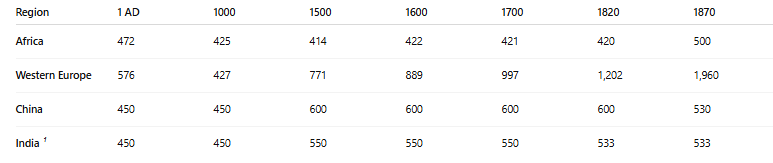
¹ India here = Indian subcontinent (modern India, Pakistan, Bangladesh). Wikipedia
What do we see?
- Up to 1800, China and India are not poorer than Africa. In fact, they are a bit richer per person.
- All three – Africa, China, India – are stuck near subsistence levels for many centuries.
- Western Europe breaks away first, especially after 1500, and then more after 1820.
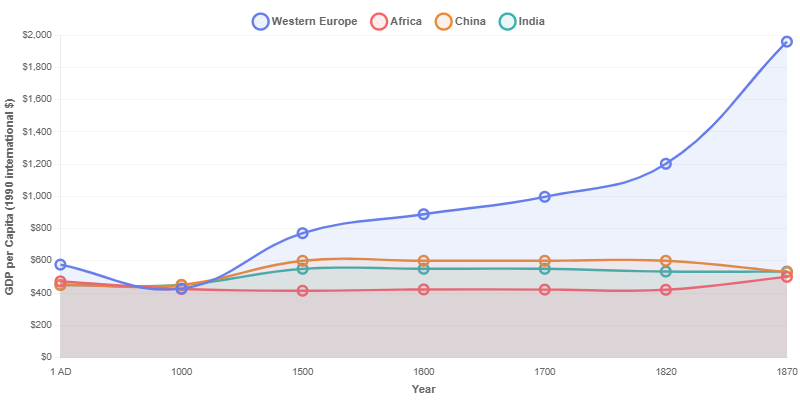
So far, Africa, China and India are in a similar place: all hit by empire, war, and foreign control in different ways.
The big difference shows up after 1950.
After 1950: China and India pull away, Africa stays almost flat
Look at the same Maddison data for the modern period: Wikipedia
GDP per person – 1950 to 2008 (1990 international dollars)

This is the key:
- In 1950, Africa is richer per person than China and India.
- By 2008, China’s income per person is almost 4× Africa’s.
- India’s is about 1.7× Africa’s.
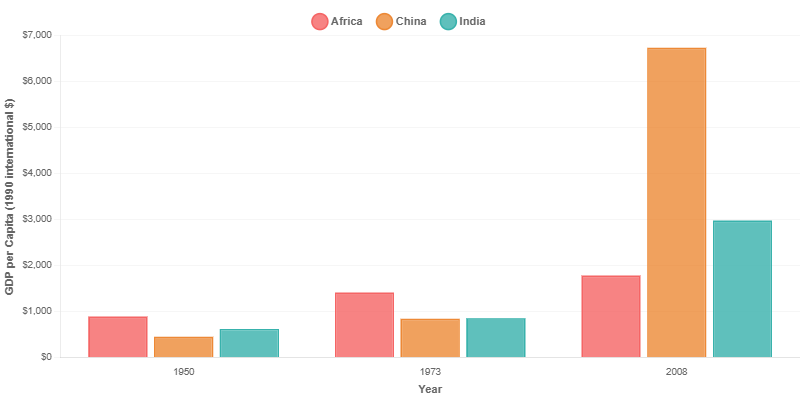
China went through civil war, foreign invasion, famine, and deep internal trauma. India went through two centuries of British rule and a bloody partition.
They were also colonised and despoiled.
Yet in the last 70 years, both chose reforms and paths that drove massive growth:
- Big investments in social services such as basic education, healthcare and infrastructure
- Strong pushes into industry and later services and tech
- Hard, painful policy choices over decades
Meanwhile, Africa as a whole did not see the same jump in complexity and growth.
So the honest message is:
Colonialism and exploitation matter. They left deep scars. But they do not fully explain why Africa has not taken off, while other once-poor, once-colonised regions have.
This is where I make my point about responsibility.
If we keep telling a story where only others are to blame, we miss what China, India and others did after colonialism:
- They faced hard truths.
- They made tough internal choices.
- They held themselves – and their leaders – accountable over time.
If Africa is to rise in the age of AI, we must do the same:
- Use history to understand, not to hide.
- Stop using trauma as a shield against self-critique.
- And start building the kind of long-term policies, firms and institutions that let countries escape the trap.
Blame explains our pain. It does not build our future.
Why I Stopped Being a “Woke” Pan-Africanist
This is where my story gets personal.
At Yale, I was the loud Pan-Africanist in the room. I marched. I spoke. I wrote.
I told friends I was turning down a quant finance job in New York so I could “go back and liberate my people.”
I do not regret going back home. It made me see Africans for who they truly are. Not victims but agents in their own story. But I do regret the mindset I carried:
- Everyone else was to blame.
- The problem was always “them.”
- My job was to call out injustice, not to look in the mirror.
Today, I see a lot of that same mindset online with the new generation of performative Pan-Africanists – who talk , talk, talk and find every reason in the book to not take any action.
Many people who call themselves “Pan-Africanist” are:
- Very woke on Linkedin, Twitter and Instagram
- Very good at calling out the West, the IMF, the World Bank, colonial borders
- Very loud about trauma and pain
But often:
- Quiet about our own failures
- Silent about local corruption
- Missing when it is time to do the hard, boring work of building
We cannot build a strong Africa only by shouting “Africa Unite” in English on social media.
We must be honest:
Most Pan-Africanism today is just performance. It is a costume. It is not work.
And if I am honest, I was once part of that crowd.
A New Africanism: Truth + Responsibility + Hard Work
So where am I now?
I still love Africa. I still believe in African dignity. I still call myself an Africanist. because as a ‘Lifeist’ – it is the best place to do my life’s work – to improve the quality of all life forms that are currently being exploited en masse especialy in Africa.
But my Africanism today is different:
- Truth over comfort I choose data, not just stories that make me feel good. If the charts show Africa was already behind before 1884, I accept that, even if it hurts.
- Responsibility over blame Yes, others did harm. But if we want to win, we must also ask: “What did we do wrong?” How were we a part of our own exploitation?”“What are we doing wrong? “How are we a part of the African problem today?” What can we do better?”
- Hard work over performance Real change happens in policies, factories, labs, startups, schools and clinics. Not only in hashtags and conferences.
If Africa is to move forward, we must:
- Accept responsibility for our choices
- Hold ourselves and our leaders accountable
- Do the hard, long work, day after day
The pity party and blame game must end. Not because history does not matter. But because blame is not a strategy and Africa was never a victim. We were and are still active agents in our own story.
Where AI Fits In: Complexity, Not Just Cocoa to Chocolate
So why is an AI founder talking about this old GDP data?
Because AI is now one of the key “building blocks” of global power and wealth.
Think of an economy like a box of LEGO:
- The more types of pieces you have,
- And the more people who know how to combine them,
- The more complex things you can build.
Most African countries:
- Export a few simple products (raw minerals, crude oil, unprocessed crops)
- Import many complex products (machines, electronics, advanced drugs)
“Adding value” by just grinding cocoa or polishing minerals keeps us in the simple space.
To truly move up, we need:
- Many more skills
- Many more industries
- Many more firms that can mix local and global knowledge
That is called economic complexity.
AI can help us jump:
- In health, by building tools that work for African clinics and patients
- In finance, by designing services that fit our informal economies
- In climate, by helping farmers, cities and grids adapt
- In public policy, by making government more efficient and transparent
But this will only happen if Africans:
- Own the data
- Build the models
- Design the products
- Set the rules
If we are not careful, AI will repeat an old pattern:
- Africa gives raw data and cheap talent
- Others build the complex products and keep the profits
I refuse that future.
My Ask: To the Builders, Investors and Policymakers
If you are still reading, you are likely:
- An African builder (founder, operator, engineer, civil servant),
- A global investor or partner looking at Africa, or
- A policymaker trying to make sense of AI and development.
Here is my ask.
If you are an African builder
- Stop waiting for perfect leaders. Build anyway.
- Learn skills that plug into global markets, not only local consumption.
- Build products that can sell beyond your own country.
- Hire and train people so that your company raises the skill level of your community.
If you are a global investor or partner
- See Africa not just as “emerging market yield” or “cheap devs,” but as a place to build complex products with African partners.
- Back teams that mix local insight and global know-how, especially at the intersection of AI, health, finance and climate.
- Be ready to stay, not just surf the hype cycle.
If you are a policymaker
- Protect peace by protecting justice for the most vulnerable — women, children, “social outcasts” and minorities. The quality of your security is directly linked to how you treat your most vulnerable people. Without peace, nothing else matters.
- Build clear, stable rules for AI, fintech, healthtech and climate tech.
- Invest in your people and social services, not just your elites and shiny physical infrastructure. Put money into education, primary healthcare and strong social safety nets. Make sure the public sector buys from indigenous producers, instead of always favouring foreign firms or foreign-owned companies. And build talent that blends skills — code + health, policy + data, design + finance — so your people can compete in a complex, AI-powered world.
- Young people must run for office and vote for young leaders (enough of these old people) who put people before runaway capitalism. For too long, we’ve had politicians who chase deals and mega-projects, but invest too little in local people and social services. This has to change if young Africans want any real chance at a different future.
- Support local industries that raise economic complexity, not just those that increase raw output or do simple beneficiation.
No More Easy Stories
I did not write this to win an argument on Twitter. I wrote it because I want Africa to win the future.
Since taking Prof. Hausmann’s course, I made a clear choice in my companies across Africa: we raised salaries so that our workers earn above the World Bank poverty line (PPP-adjusted). I see the private sector as a tool to do what the public system often fails to do.
The result? Our people live with more dignity, and our businesses have grown stronger and more profitable.
I ask other private sector leaders to do the same and pay their people livable wages.
The data hurts. The history hurts. But facing the pain is the first step to healing.
I was once the young, loud Pan-Africanist who blamed everyone else. Today, I am a quieter, more stubborn Africanist:
- Who believes in truth, even when it is not flattering
- Who insists on responsibility, even when it is heavy
- Who is ready for hard work, even when it is slow
If this speaks to you— as an investor, a partner, a policymaker or a builder—my inbox is open.
Let’s stop playing victims. Let’s stop performing pain. Let’s build an Africa that owns its future in the age of AI.
Onwards!
Discover more from Adebayo Alonge
Subscribe to get the latest posts sent to your email.

