To: The President, Federal Republic of Nigeria
From: Adebayo Alonge, an Entrepreneur & Student at Harvard University
Date: 17/12/2023
Subject: Strategy for Climate Change Adaptation and Clean Energy Transition in Nigeria
Dear Mr. President,
I write to you concerning a matter of utmost national importance and urgency: the impact of climate change on Nigeria and the need for immediate and comprehensive action. Climate change is a multifaceted threat that affects the economy, agriculture, water resources, health, and the overall well-being of our nation. However, it also presents immense opportunities for us to reimagine our energy system, enabling us to bring new forms of energy into the homes and businesses of every one of our people, wherever they may be. This transition provides the opportunity for Nigeria to become a global green superpower, exporting natural gas and clean energy commodities such as lithium, as well as green products like aluminum, steel, glass, and hydrogen that can be locally produced using our abundant renewable solar, wind, and hydropower resources. This shift will immediately improve the quality of life for the majority of our people, help create jobs, and unlock new opportunities to attract investments into our energy and manufacturing industries.
Understanding Climate Change
Climate change is an existential problem to the human race because it is leading to a rise in global temperatures that may make many parts of the world uninhabitable. And it is particularly such a wicked problem because of 3 reasons – cumulative global emissions of greenhouse gasses, long time scales and the need for global collective action.
Firstly, the global climate system does not care if your country is a minor or major polluter. It only cares about the cumulative global emissions of greenhouse gasses such as carbon dioxide (Co2), methane etc. As such although Nigeria and by extension Africa has been a minor polluter of Co2 (the most important greenhouse gas), accounting historically for only 0.25% and 2.88% respectively of cumulative global emissions (See Exhibit 1), our people continue to bear disproportionately the brunt of climate change effects such as declining water resources, desertification, flooding due to sea level rise and unpredictable extreme weather events. These climate related adversities have led to mass displacement, crop losses and conflict worsening social and economic outcomes for too many of our people.
Secondly, addressing climate change is a hard problem because of the long-time scales involved. The Co2 we emit today requires forty thousand years (40K) years for the earth’s natural system of ocean uptake, ocean sediment reaction & rock chemical weathering to remove (See Exhibit 2) and reduce it to pre-industrial atmospheric CO2 concentrations of 280 ppm (currently at ~420 ppm and on track to get up to 970 ppm by 2100 (1)). And while some of its effects such as higher temperatures, loss of water resources, extreme rainstorms and fires are more immediate, some others such as sea level rise take hundreds of years for sufficient chunks of the world’s glaciers and ice shelves to melt to lead to noticeable changes in sea levels. These long-time scales may make it difficult for many to understand why we need to urgently solve this problem especially when most of the adverse events are likely to affect many generations yet unborn.
Lastly, climate change needs global collective action to solve. In an age of nationalism, border closures and protectionism can humans coordinate on a global level in an unselfish manner to solve this problem? Will rich countries who have built their wealth on pollution go beyond just reducing their emissions to also ensuring climate equity for developing countries by financing their uptake of clean energy technologies? We have seen progress in the recent COP28 with the operationalization of the loss and damages fund but more needs to be done by rich counties to fulfill their pledge under the 2009 UN Climate Change Conference/COP 15 (Copenhagen Accords) to mobilize $100 Billion per year to support climate change action in developing countries (2).
Scientific evidence proves that climate change is human-made and is not part of the natural cycle. Since 1958, scientists have measured the concentrations of CO2 in the atmosphere at the Mauna Loa Observatory in Hawaii. And have used these measurements to build a graph known as the Keeling curve (See Exhibit 3). This curve provides evidence that the rapid increase in atmospheric CO2 is due to human activities, primarily the burning of fossil fuels. C02 and other greenhouse gasses have a heating effect because they serve as a blanket that traps the heat that the earth receives from the sun. As more CO2 has been emitted, there has been a corresponding increase in the earth’s current surface temperature to 15 Celsius – an increase of about 1 Celsius since the pre-industrial period i.e. AD 1880 (See Exhibit 4). Most of this increase i.e. ~0.75 Celsius has occurred since 1975. Given the Earth’s high climate sensitivity this rise is worrisome. A one-degree global change is significant because it takes a vast amount of heat to warm all of the oceans, the atmosphere, and the land masses by that much. In the past, a one- to two-degree drop was all it took to plunge the Earth into the Little Ice Age (AD 1303 to 1850). A five-degree drop was enough to bury a large part of North America under a towering mass of ice 20,000 years ago (3).
Other scientific studies of oxygen isotopes trapped in the ice cores of tropical glaciers such as on Mount Kilimanjaro (which indicate air temperature when the ice was formed) have also proven that the last 50 years is the warmest the earth has been since more than 5000 years ago.
By studying the ratio of CO2 isotopes i.e. carbon-12 to carbon-13 in the atmosphere and seeing the high amounts of carbon-12 which comes from burning fossil fuels, scientists have been able to prove that the rapid warming is due to the increase in CO2 emissions emanating from the burning of fossil fuels (4).
It is important to note that while the earth has been cooler over the last 10 million years than it is now, the earth was in fact warmer than it is now about 40 million years ago in what is known as the Eocene period (5). The deep ocean temperature then was 12 Celsius vs. 1 to 2 Celsius today and surface earth temperature was 28 Celsius vs. 15 Celsius today (6). But it took millions of years for the earth to get this warm. We are increasing the earth’s temperature in a much shorter time period – only 200 years. The only historic event comparable to what we are doing today is the Paleocene-Eocene thermal maximum (PETM) event that occurred 55 million years ago when the earth surface temperatures warmed 5 to 8 Celsius. During this time, palm trees grew in the coldest regions of North America – an indication that the current scientific models being used to forecast climate change impacts may in fact be underestimating what can happen when the earth warms so rapidly. The current models forecast a smooth increase in temperature, changes in rainfall and sea level. In reality, actual climate changes in the past have tended to be abrupt and may indicate that humid tropical areas that are already so warm may actually be completely uninhabitable at such high temperatures and that many countries in tropical regions such as Nigeria may have to be completely evacuated to more northern latitudes if their peoples are to survive. After the PETM, it took 140 million years for the earth to reverse the changes from this period. This serves as a warning that it may take hundreds of thousands of years for the earth’s climate to fully recover (5). Civilized humanity arose during a cool period that has lasted 10 million years and was expected to continue for another 50 thousand years. We have never seen a climate change as severe as the global warming we are now bringing about.
The 2015 Paris Agreement (COP21) goal is to hold the increase in the global average temperature to well below 2 Celsius above pre-industrial level and pursue efforts to limit the temperature increase to 1.5 Celsius above pre-industrial levels. It does not appear that humanity is on track to meet this goal (7). If global CO2 emissions continue on current trend (36.8 Gigatons/year (8)), we are likely to reach 2 to 4 Celsius above pre-industrial levels by the end of this century (9). This will have catastrophic effects for the world and especially for Nigerians.
Under the current trend, the earth will be 1 to 3 degrees warmer than it is now and the average annual daily temperature in Nigeria may be up to 30 Celsius by then. Although this may not look like a lot of change and there may be regional variations with some places even warmer or cooler, given the high humidity in many parts of the country, life may end becoming very difficult for most people. More people will need to rely on air-conditioning to live through normal days, less people will remain outdoors for any extended period of time and the risks of heat stroke and other types of heat stresses will increase the care burden on our already overstretched healthcare system. Some professionals such as in construction may be unable to work given the heat leading to extensive job losses. Higher temperatures will also lead to drying out of the agricultural lands causing crop failures and evaporative losses of water bodies. Combined with the expected increase in erratic rainfall with some regions seeing lower than expected rain there may be droughts for extended periods that decimate the agricultural industry putting at risk the ability of our farmers to feed their families and the rest of the nation. Heavy rainfall in some areas will lead to extensive flooding destroying farmlands, homes, property and potentially killing many people. In the long term over the next hundred years, several coastal cities such as Lagos, Port Harcourt, Bonny Island may have large swathes inundated by rising sea levels which are projected to rise by up to 7 feet globally if the world continues to emit CO2 as per current trends (10). Flooding may contaminate underground water tables and lead to the spread of vector borne diseases. The combination of these adverse climate related events will lead to mass displacement, higher unemployment levels and potentially worsen insecurity and conflict in the country.
Recommended Climate Adaptation Strategies
In order to prevent these identified challenges and so as not to be caught unawares, it is important to develop a comprehensive climate risk assessment report that identifies all potential climate risks across all local government areas in the country. Every local government area will experience climate change impact differently. It is therefore important to know what these risks are so as to develop a national preparedness strategy and to prepare the people ahead of time so that they can know what to expect and also so that they can be prepared to adapt to the problems as they arise.
There are five adaptation strategies I would like to propose – community engagement & education, building resilient infrastructure, agricultural adaptation, water resource management, public health resilience and clean energy transition.
Firstly, every local community needs to be educated about climate change and everyone needs to be engaged in generating the solutions. Climate change is a collective action problem and we need to mobilize our people to help solve it. The people are an important resource to co-generate solutions to this issue as they are the ones experiencing the problem first hand. Local government town halls should be organized to sensitize the population. Climate knowledge extension officers should be hired to go door to door to educate people. National media campaigns on television, radio, billboards and digital media should be conducted to educate the people about what climate change is, the risks posed and the opportunities available. Ideas should be solicited for local solutions to address climate change. Hackathons can be held at universities and polytechnics with funding made available by local banks and guaranteed by the government. This will help to finance local innovations into potential businesses that can then develop products and services that solve local climate change related problems while generating employment and potentially export dollars. The national preparedness and response strategy that is developed as part of the risk assessment and ideas solicitation should be disseminated to every household so that people know how to identify climate related extreme weather events, what to do, where to go and whom to call when these events occur in their communities. The National emergency management agency should also have budgetary reserves mandated by law passed by the federal legislature so that they have enough funding to address all climate emergencies as they occur. This reserve fund should be financed directly from a share of government royalties earned from export of crude oil, natural gas and through direct grants from developed countries & multilateral institutions.
Secondly, infrastructure must be built to be resilient and enforced through building codes passed by state legislatures. In flood prone areas, utility grid transformers and building electric switch boxes must be mandated to be hoisted several meters above ground. This will ensure that in the event of flooding that there are no widespread power outages and will also reduce negative health risks of electrocutions. Sewers should be enforced to be built as fully closed off so that sewage does not leak into ground water during floods. In the Sahelian north, a tree fence should be planted to keep the soil in place and reverse the encroaching desert. This tree presence will provide cover reducing the evaporation of surface and underground water reserves. An ambitious plan can be put in place to pipe in ocean water from the Atlantic to the Lake Chad region and have it desalinated. The desalinated water can then be used to refill Lake Chad and reverse the 90% loss of water that the lake has faced over the last 30 years. This will help preserve the livelihoods of the communities who rely on the lake for food, transportation and commerce. In coastal cities, slums on the sea should begin to be moved to higher ground with sufficient awareness and alternatives provided to their inhabitants and a clearly defined timeline to complete the migration. Coastal seawalls similar to the Eko Atlantic great wall should be constructed across the entire length of the southern coast of the country. Financing can be raised through public-private partnerships or by tapping the climate adaptation funds being put together by developed countries.
Thirdly, subsistence and commercial agriculture should be adapted for resilience. Farmlands can be mandated to have rain-water collection towers that run off rainwater into underground and above-ground storage tanks. This will ensure that there is water supply in the event of droughts. Research labs such as the International Institute for Tropical Agriculture (IITA) should be mandated to develop new crop varieties that are purpose bred to be resilient in drought and flood conditions. New techniques for farming that preserve biodiversity, soil fertility and climate resilience should be developed and disseminated by agriculture extension workers to all farmers. Encourage the implementation of AI tools working with satellites and drones to automate the checking of the health of crops and farmlands at scale with recommendations of solutions to apply such as irrigation, fertilizer, organic pesticides etc. This way technology can scale up farming, increasing the responsiveness of farmers to climate change effects and reducing losses.
Fourthly, prioritize water resource management. As the Nigerian population continues to grow from its current 200M base and as agriculture and industry becomes more intensive, the demand for water will increase dramatically. Combined with climate change and encroaching desertification, Nigeria will need to develop and enforce policies and laws that treat water as a strategic resource. There needs to be a comprehensive update of all fresh water reserves in the country with every local government area assessed for water scarcity risk based on current and projected future population, agriculture and industrial growth. Strict measures need to be taken to protect access and ration access to underground aquifers. Households, agriculture and industry need to be trained and informed about water management techniques and a fair price should be placed on boring water holes, distributing and use of water so as to reduce wastage. Waste water should be treated and repurposed for use in the homes, farmlands and industry so as to save the freshwater resources. Desalination plants and pipelines should be built from the southern coast to areas facing water scarcity so as to make desalinated water available to these communities for their use.
Fifthly, public health systems should be equipped for resilience. Use digital tools to enable remote telecare so as to make up for shortages in healthcare personnel. Focus on preventive health campaigns including vaccination of young children, promotion of consumption of nutritional foods and encouragement of health lifestyles. This will help reduce the prevalence of lifestyle diseases and free up capacity for the health system to address climate related emergencies. Conduct public health campaigns that also use pharmacies and chemists as focal hubs to teach the population on how to prevent and treat heatwaves and vector-borne diseases such as malaria, yellow fever, elephantiasis, dengue fever, river blindness, schistosomiasis, sleeping sickness etc. This will ensure that households and pharmacies can prevent and treat less urgent climate induced diseases while helping the hospital system to have extra capacity for more acute conditions.
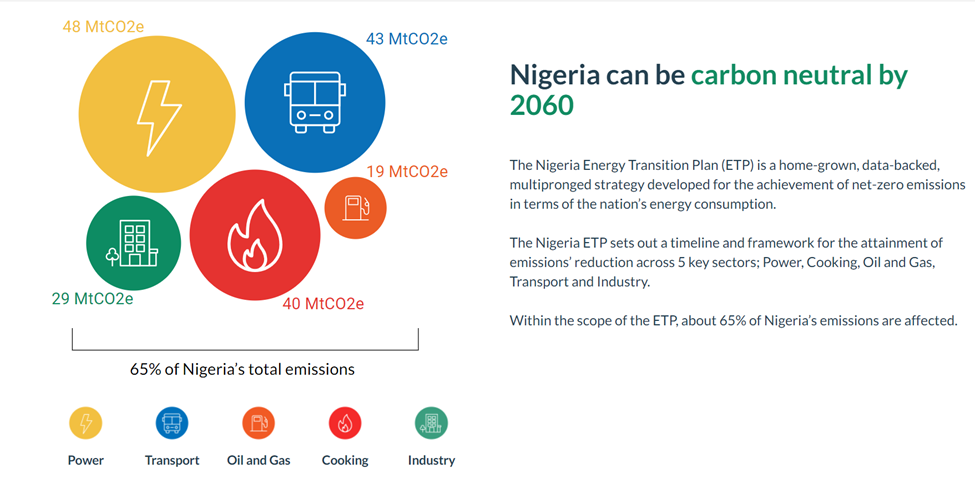
Lastly, aggressively implement the Nigeria Energy Transition Plan (NTEP) which aims for the country to no longer emit carbon (i.e. achieve carbon neutrality) by 2060. In order to achieve this goal, Nigeria must take stock of its current energy sources, how they are used and define the strategy to pursue towards carbon neutrality. Nigeria Energy Sources currently consists of Petroleum (67%), Natural Gas (32%) and Renewable Energy (1%. Its use of these energy by end-use sector is in Residential (78%), Industrial (9%), Transport (7%), Commercial (3%). Its electricity sector is powered using Coal (74%), Renewables (26%). Nigeria’s greenhouse gas emissions are mostly driven by agriculture, oil & gas i.e., from fugitive emissions transport, residential/commercial – consisting of buildings and industry. To achieve Net Zero by 2060 as per the Nigeria Federal Government stated goal, Nigeria must prioritize decarbonization of its electricity, transport, cooking, industrial and oil & gas sectors (See Exhibit 5).
To decarbonize electricity, Nigeria needs to transition residential/commercial buildings from petrol/diesel generators. This can be done by powering the core baseload through a centralized gas-powered grid then ramping up integration of decentralized renewables (mini-grids & off-grids). The government needs to encourage the use of solar home systems for low density areas i.e., villages and Mini grids for larger communities. Policies such as tax cuts can be offered to industries that implement solar PV/ wind systems + battery systems to power production.
To decarbonize transportation, pass a law that mandates all fuel stations to start selling blended biofuels from 2030. Start by enforcing the biofuel blend rate of 30% by 2030 and then transition all vehicles to electric by 2060. Mandate all gas stations to install charging stations for commercial charging and battery swaps for consumers.
To decarbonize household cooking, pass a law that mandates all households to replace firewood, kerosene & charcoal cookstoves with LPG (liquefied petroleum gas) by 2030. Provide rebates to customers that helps them cover the cost of this transition and makes the use of this new energy source cheaper than firewood, kerosene and charcoal. This also has the added benefits of reducing respiratory diseases for women and children while also reducing deforestation. Then transition all households to electric cookstoves and biogas- 65% by 2050 and 100% by 2060 – continue to provide rebates to make this possible. Tap global climate finance funds to finance these rebates.
To decarbonize the oil & gas industry, reduce oil production as global demand falls, eliminate flaring by 2030 and reduce fugitive emissions by 95% by 2050. Gas flares consist of methane and this can be contained, liquefied, pressurized and exported as natural gas earning the country much needed forex.
To decarbonize the cement industry, replace clinker with calcined clay and use bioenergy with carbon capture and storage (BECCS) to remove residual CO2 emissions. For ammonia production move to using clean hydrogen (i.e. green hydrogen) and move to zero emission fuels i.e., clean electricity and hydrogen for heating instead of natural gas and biomass (11).
Any residual CO2 emissions from land use changes, heavy transportation, shipping and other energy intensive activities especially in heavy industry should be decarbonized using carbon capture and storage technologies. Provide tax cuts and rebates to make the use of these technologies affordable. Tap global climate funds to finance these spending programs.
Promote a review of the educational curriculum especially the vocational education system to train our young people to take up skills to build and install clean energy systems and to be able to work in clean energy industries, energy parks, vehicle and battery production plants.
Finally, position Nigeria to become a global Green Super-power – exporting natural gas, clean energy commodities such as lithium and green products such as aluminum, steel, glass, hydrogen that can be locally produced using our abundant renewable solar, wind and hydropower resources. Ensure that mining rights of local communities are protected and that the government negotiates a fair share of all revenues earned by the mining industry. Provide tax incentives and favorable industrial policies that encourage clean energy commodity processors & electric vehicle manufacturers to set up assembly and production facilities in Nigeria.
Conclusion
Climate change is an existential crisis that disproportionately affects developing countries such as Nigeria. Although Nigeria has contributed a tiny amount of cumulative global CO2 emissions, it faces significant adverse impacts from the climate change brought about by the pollution done by others who have become rich in the process. While this is unfair, the developed world is coming together to ensure climate equity for countries such as Nigeria. It is important for the country to engage proactively with the rich world to tap the funding being made available to finance climate related losses, damages and to subsidize the uptake of clean technologies by the Nigerian people and their industries.
The Nigerian government must also take action on the proposed adaptation strategies of: community engagement & education, building resilient infrastructure, agricultural adaptation, water resource management, public health resilience and clean energy transition.
This will immediately improve the national preparedness to respond to negative climate impacts, improve the quality of life for the majority of the Nigerian people, help to create jobs and unlock new opportunities to attract investments into the Nigerian energy and manufacturing industries.
Exhibit 1 : “Our World in Data”: Share of Cumulative CO2 Emissions, 2022
Source: https://shorturl.at/tHTU1 , Accessed, December 2023
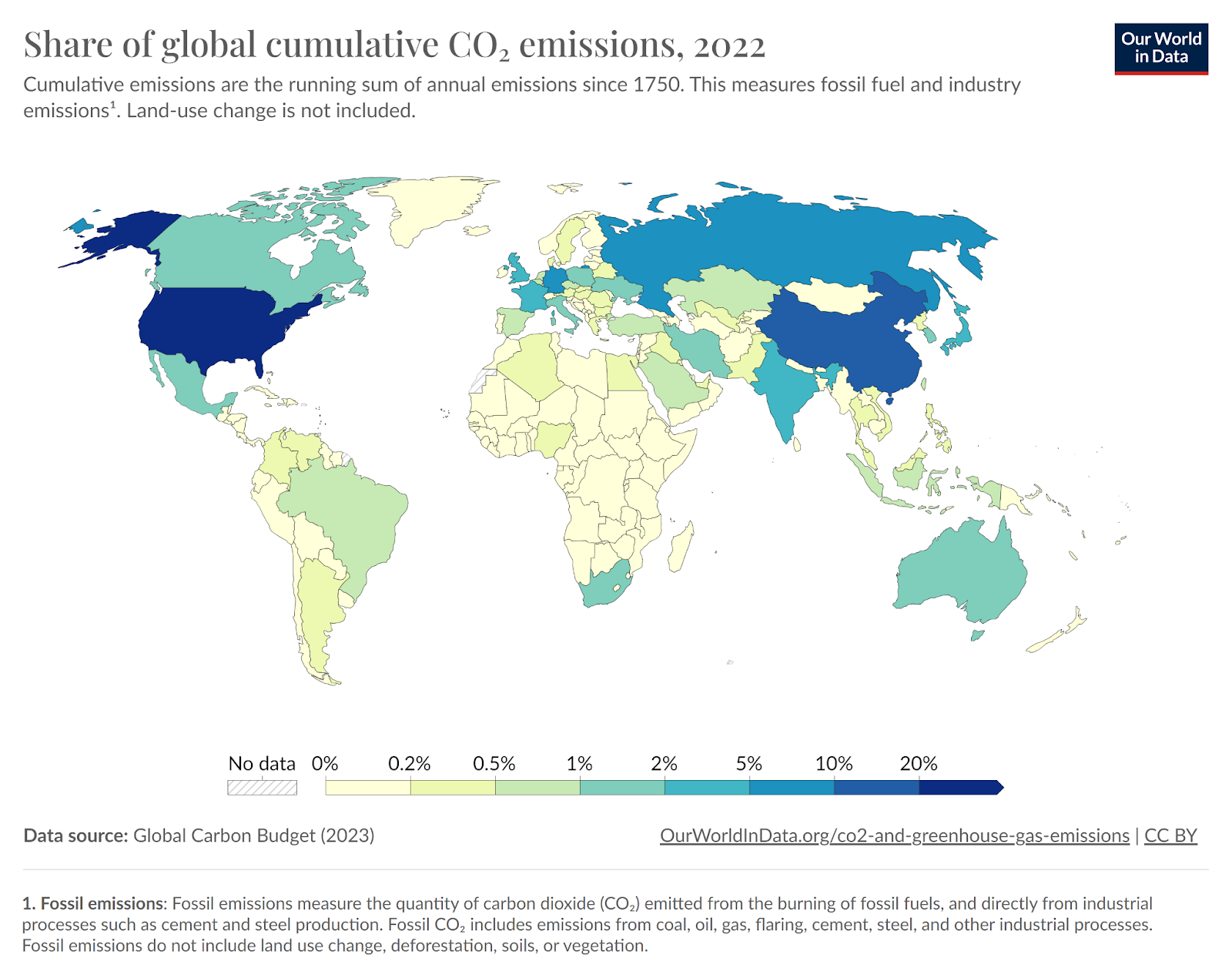
Exhibit 2: Long Lifetime of Carbon Dioxide (C02)
Source: https://shorturl.at/svIS6, Accessed, December 2023
2:

Exhibit 3: The Keeling Curve
Source: https://shorturl.at/azHUX , Accessed, December 2023

Exhibit 4: The Hockey Stick Temperature Reconstruction Curve
Source: https://shorturl.at/deoHX , Accessed, December 2023

Exhibit 5: Nigeria Energy Transition Plan- Carbon Neutral by 2060
Source:https://shorturl.at/ptvIN , Accessed, December 2023
Sources:
- Association for Canadian Educational Resources (ACER)): “Projections for Carbon Dioxide (2023)”, Available https://shorturl.at/atCF0 , Accessed December 2023
- OECD: “Climate Finance and the $100 Billion Goal”, Available https://shorturl.at/wAQ08 , Accessed December 2023
- NASA: “ Earth Observatory”, Available https://shorturl.at/bfhNT , Accessed December 2023
- Phys.org: First Compilation of Tropical Ice Cores Shows Abrupt Global Climate Shift , Available https://shorturl.at/BOTZ7, Accessed December 2023
- David Archer: “ The Long Thaw”, Published 2016
- American Museum of Natural History: “Interval 1”, https://shorturl.at/muGI1, Accessed December 2023
- United Nations Climate Change (UNCC): “The Paris Agreement”, Available https://shorturl.at/rKVZ9 , Accessed December 2023
- International Energy Agency (IEA): “CO2 Emissions in 2022” , Available https://shorturl.at/uAQY0 , Accessed December 2023
- Wisconsin Department of Natural Resources: “The Science of climate change” , Available https://shorturl.at/uyPY3 , Accessed December 2023
- National Ocean Service: “2022 Sea Level Rise Technical Report”, Available https://shorturl.at/QRVY5 , Accessed December 2023
- Nigeria Energy Transition Plan, Available https://www.energytransition.gov.ng/#Plan, Accessed December 2023
This Paper reveived an A-Grade at Harvard University and was republished by National Newspapers in Nigeria- see below
- The Nation: https://thenationonlineng.net/strategy-for-climate-change-adaptation-and-energy-transition/
- The Guardian: Part I: https://guardian.ng/opinion/climate-change-and-clean-energy-transition-in-nigeria/ , Part II: https://guardian.ng/opinion/climate-change-and-clean-energy-transition-in-nigeria-part-2/
- The Independent: Part 1: https://independent.ng/climate-change-adaptation-and-clean-energy-transition-1/, Part II: The Independent: https://independent.ng/climate-change-adaptation-and-clean-energy-transition-2/ , Part III: https://independent.ng/climate-change-adaptation-and-clean-energy-transition-3/ , Part IV: https://independent.ng/climate-change-adaptation-and-clean-energy-transition-4/
Discover more from Adebayo Alonge
Subscribe to get the latest posts sent to your email.

