By Adebayo Alonge
A right without enforcement is a suggestion. A world without a hegemon is not free. It is a lottery — and the weak always lose.
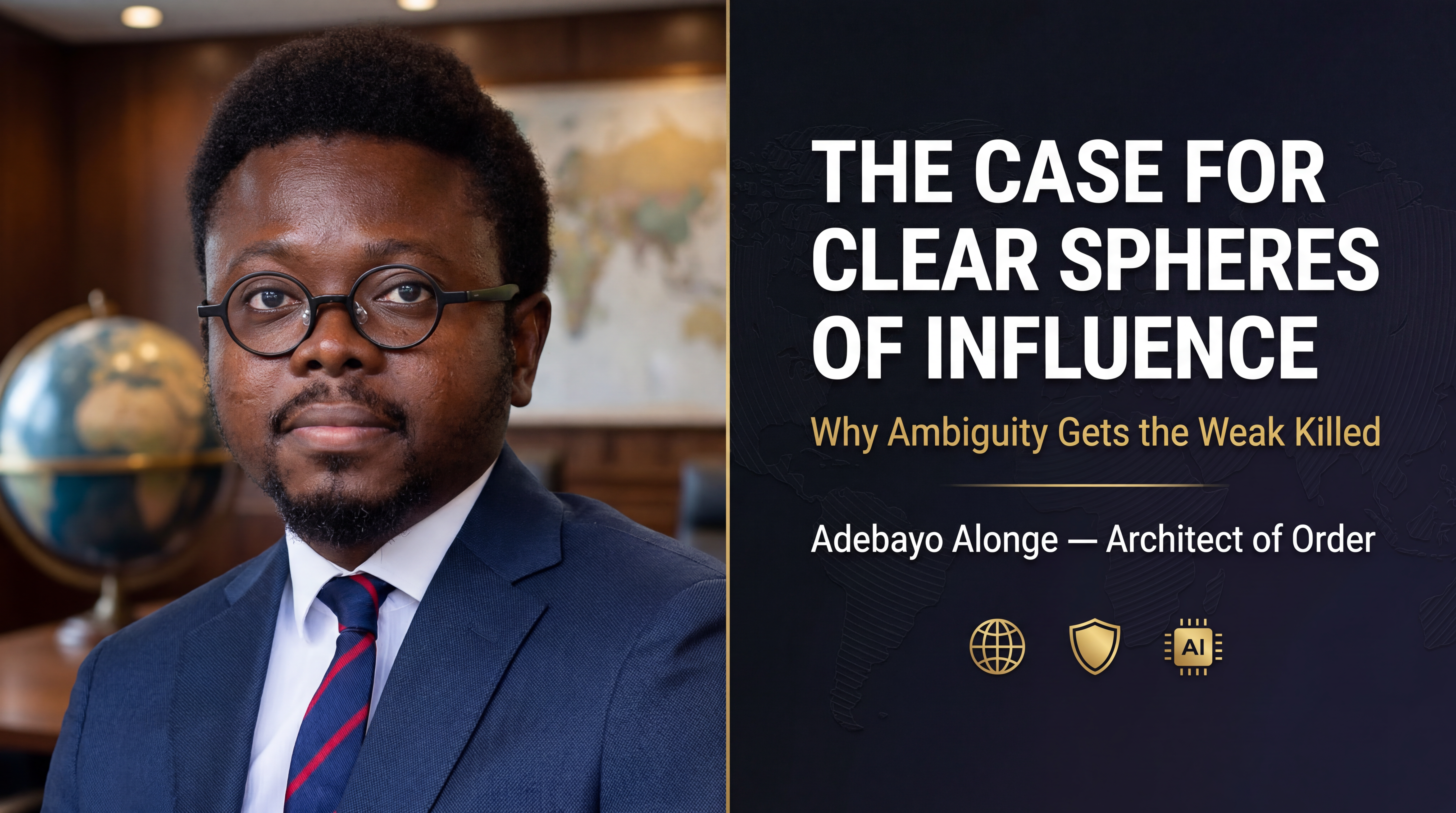
Hegemony is not a dirty word. It is a structural description. And confusing the two is one of the most dangerous intellectual errors of our time.
A generation of scholars and commentators has turned “hegemony” into a synonym for oppression. They have taught students, policymakers, and journalists to flinch at the word — to treat the concentration of power as inherently immoral rather than examining the conditions under which it produces stability or chaos.
This confusion is not academic. It has consequences. Real ones. Measured in wars that should have been deterred, supply chains that collapsed because no one maintained them, and medicines that were counterfeited because no institution was strong enough to police the market.
I build AI systems that authenticate drugs at the molecular level. I deploy capital into small businesses that banks have abandoned. I design solar cold chains that keep vaccines viable where the grid does not reach. Every one of these ventures depends on a minimum threshold of global order to function. And that order has a name: hegemony.
The Historical Record Is Not Ambiguous

The evidence is not subtle. When hegemonic power is clear and uncontested, the world is more stable. When it fractures, the world becomes more dangerous — and the weak pay first.
Britain’s naval hegemony from 1815 to 1914 produced the Pax Britannica — the longest period of European peace in centuries. It was imperfect. It was imperial. It was also stable.
American hegemony from 1991 to roughly 2008 produced a similar effect at global scale. Great power war disappeared. Trade expanded. Institutions — imperfect ones — functioned well enough to maintain a baseline of order.
When that hegemony was challenged — by China’s rise, Russia’s revanchism, the erosion of American domestic consensus, and the retreat from multilateral commitment — the world became measurably more volatile. Syria. Ukraine. The South China Sea. The Sahel. The list grows every year.
This is not ideology. This is pattern recognition.
The Overcorrection
The critique of hegemony comes from a reasonable place. Empires have abused power. Colonialism was extraction dressed as civilization. The Iraq War demonstrated that even well-intentioned hegemons can act recklessly.
But the critique has overcorrected into something dangerous: the belief that all concentrations of power are equally bad, that the absence of a hegemon produces freedom, and that rules-based institutions can substitute for the power that enforces them.
They cannot.
The UN General Assembly can pass a resolution condemning an invasion. It cannot stop one. The International Criminal Court can issue an arrest warrant. It cannot execute one. The World Health Organization can declare a pandemic. It cannot deliver authenticated medicines to a rural clinic in Myanmar.
Documents do not defend. Systems do. And systems require power to function.
What the Weak Understand
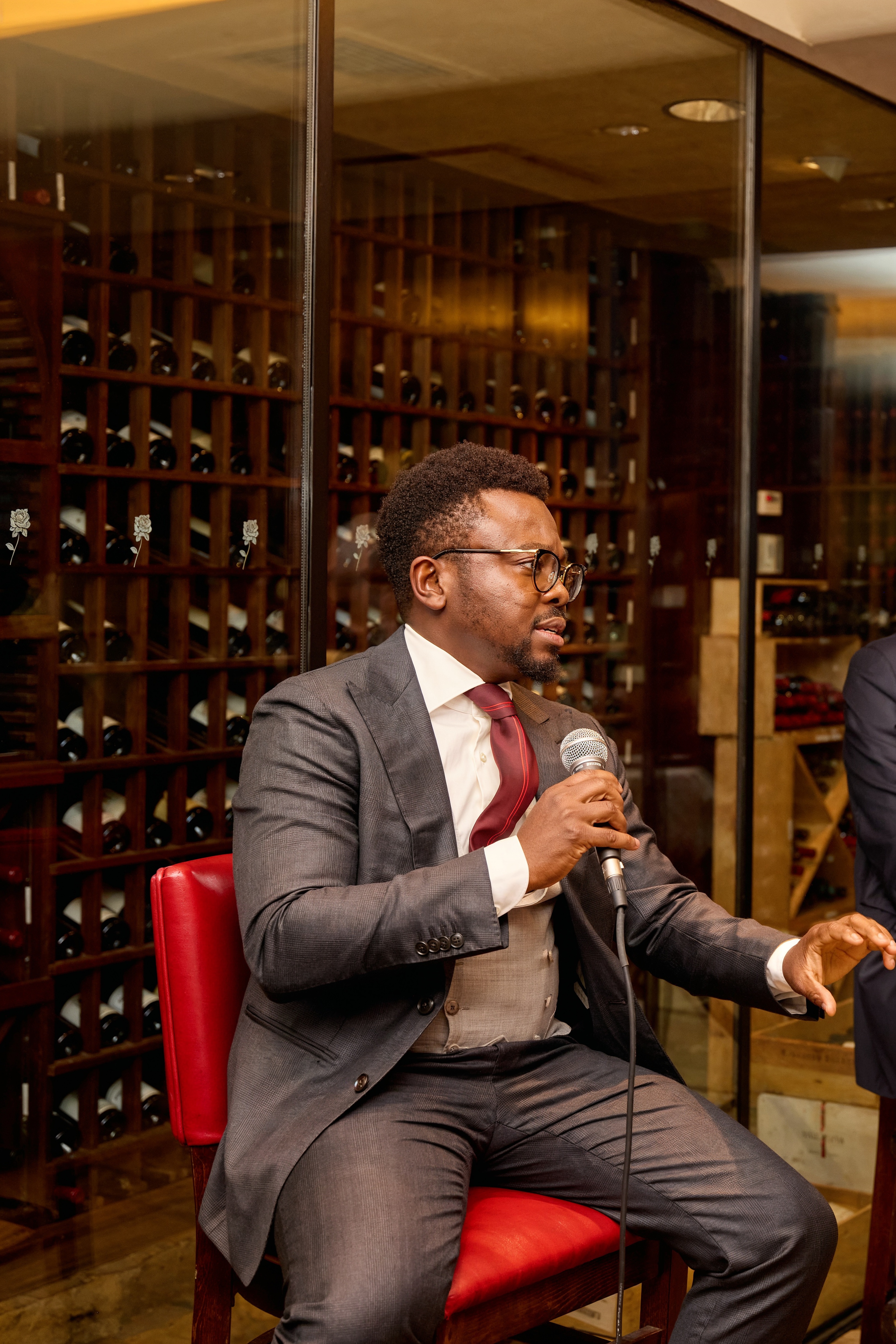
Those of us who grew up in places where the state was not strong enough to guarantee safety understand something that comfortable people have forgotten: ambiguity kills.
When spheres of influence are unclear, small nations become contested terrain. They become proxies. They become the space where great powers project force without accepting responsibility.
I was born in Nigeria — a country rich enough in resources to be a regional power, but governed weakly enough that counterfeit medicines flood the market, Islamic terrorists and criminal bandits pluck people off the highways at will and massacre hundreds in rural villages for days without any resistance, infrastructure decays everywhere you look, and communities learn to provide for themselves because the state will not.
This is what the absence of clear order looks like at the human level. Not theoretical. Not abstract. Measured in patients who die because the antimalarial was fake. Measured in entrepreneurs who cannot access capital because no institution is trusted enough to underwrite the risk.
At RxAll, we went from a 40% clinic rejection rate to 92% adoption — not by improving our technology, but by building the trust infrastructure that the state had failed to provide. We became, in miniature, what a hegemon does at scale: a credible enforcer of standards that people could rely on.
What Moral Hegemony Looks Like
Let me be clear about what I am not arguing. I am not arguing for unchecked power. I am not arguing that America — or any hegemon — is above criticism. I am not arguing for empire.
I am arguing that the world needs a power — or a coalition of powers — willing to bear the cost of maintaining order. And that this power must exercise its authority with three things that distinguish hegemony from tyranny:
Moral clarity: A hegemon must articulate what it stands for — not just what it opposes. It must defend principled pluralism (different civilizations assimilating into same standards that put human/bio/world welfare first), not just markets. It must protect sovereignty, not just supply chains.
Institutional accountability: Power must be constrained by the institutions it operates through. Courts, treaties, alliances — these are not obstacles to hegemony. They are what make hegemony legitimate.
Operational seriousness: A hegemon that makes promises it will not keep is worse than no hegemon at all. Red lines must be real. Commitments must be honored. Enforcement must follow declaration.
This is the architecture the world needs. Not power alone. Not rules alone. Power exercised with conscience, constrained by institutions, and backed by the operational seriousness to follow through.
The Alternative Is Not Freedom. It Is Chaos.
For those who reject hegemony entirely, I ask one question: what is your alternative?
A multipolar world where five or six powers compete for influence with no clear rules of engagement? We tried that. It produced 1914.
A rules-based order where institutions enforce norms without the backing of a dominant power? We have that now. It cannot stop Russia from invading Ukraine or China from militarizing the South China Sea. Our state sponsors of Islamist terror exporting terrorism into Africa.
A world where every nation is truly sovereign and equally capable of defending itself? That world does not exist. It has never existed. And pretending it could exist is not idealism — it is negligence.
The absence of a hegemon does not produce freedom. It produces a vacuum. And vacuums get filled — by warlords, bandits, terrorists, ideologues, surveillance states, and whoever is willing to use force while everyone else debates process.
Those of us who come from cultures where the state was never strong enough to protect us know this truth in our bones: chaos always punishes the weak first.
The Builder’s Responsibility
I am not a political theorist. I am a builder. I build AI systems, financial platforms, and energy infrastructure in places where order has broken down.
And I can tell you from operational experience: nothing we build survives without a minimum threshold of stability. Not any venture, anywhere, that serves communities the global system has forgotten.
The future will not be shaped by those who debate hegemony from the safety of tenured positions. It will be shaped by those who build — who deliver medicines where supply chains are broken, deploy energy where the grid has failed, and move capital where banks will not go.
Hegemony is not a dirty word. It is a structural necessity. The only question that matters is whether the hegemon exercises power with moral clarity — or without it.
I will always argue for the former. I will always build toward it.
Onwards.
Adebayo Alonge is the Founder and Group CEO of RxAll, Inc. A Harvard Kennedy School Mason Fellow, Yale School of Management alumnus, and MIT Legatum Fellow, he builds AI-powered platforms that deliver healthcare, capital, and clean energy to underserved markets worldwide. He has raised $11M+ from Tier 1 VCs, driven $180M+ in product sales, and serves millions of patients monthly. He is a Fast Company World Changing Ideas 2025 honoree and winner of the Hello Tomorrow DeepTech Prize.
#AIGovernance #Geopolitics #GlobalLeadership #DeepTech #MoralClarity
Discover more from Adebayo Alonge
Subscribe to get the latest posts sent to your email.

