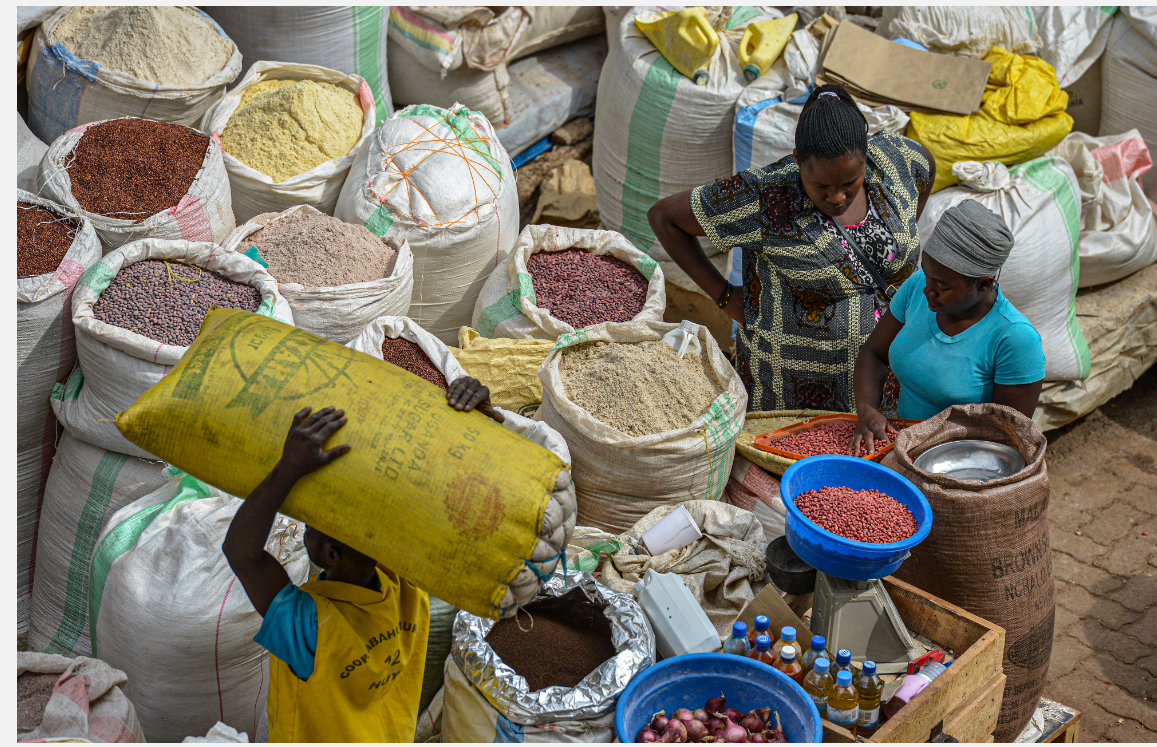
Africa should at this time prioritize its intra-Africa free trade area (AfCFTA) over and beyond pursuing continent to continent free trade areas with other major trade blocs such as the EU. After Africa has consolidated its intra-continental trade and achieved a sustained level of economic integration across its 55 countries, it will then be able to negotiate trade agreements with other trade blocs from a position of strength without jeopardizing its own industries and will be able to preserve its own self-interest.
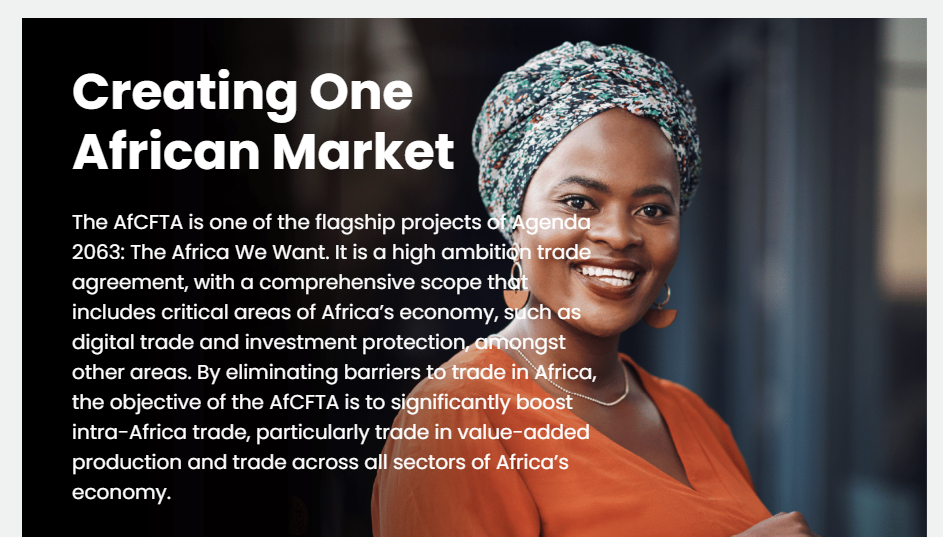
The African Continental Free Trade Area (AfCFTA) is the world’s largest free trade area worth $3.4 trillion in GDP, consisting 1.3 Billion people from 55 countries of the African Union and 8 regional economic communities(1) – Arab Maghreb Union (UMA), Common Market for Eastern and Southern Africa (COMESA), Community of Sahel-Saharan States (CEN_SAD), East Africa Community (EAC), Economic Community of Central African States (ECCAS), Economic Community of West African States (ECOWAS), Intergovernmental Authority on Development (IGAD), Southern African Development Community (SADC)(2). The AfCFTA was launched in July 2019 and trading under the AfCFTA commenced in January 2021. It aims to increase intra Africa Trade from 15.2% to between 24% to 32% by removing tariff and non-tariff barriers such as excessive delays, ad hoc fees, cumbersome documentation and restrictive product regulations (3).
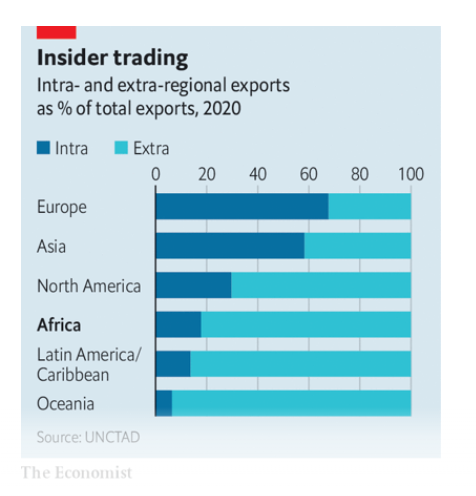
Firstly, intra-Africa trade (15.2%) is arguably low compared to other regions such as America (47%), Asia (61%), Europe (67%), Oceania (7%)(4) therefore Africa will see more of an economic boost if it can grow its share of trade within Africa as against trying to increase trade with the EU for example with which it already has developed extensive trade relationships going back centuries. By focusing on intra-Africa trade, it will also be able to build more resilience into its local market economies which today tend to suffer a lot of volatility due to over-reliance on commodity exports to extra-Africa trade partners as the EU.
Secondly, by boosting trade between Africa countries, it will lead to more sustainable development as local supply chains can be developed leading to value addition within Africa that will increase GDP while ensuring technology retention locally and creating jobs. Africa has for more than 500 years pursued triangular trade (5) with extra African trade partners to the detriment of its own local economies. It has not been able to retain and develop technology (a form of goods) locally and as a result has been reliant on importing manufactured goods produced elsewhere for which it trades for cheap its abundant commodities. By localizing trade and processing within Africa, it will be able to capture more of the value within its commodity supply chains, reduce its dependence on foreign importation, strengthen its local currencies and create more jobs for its teeming youths.
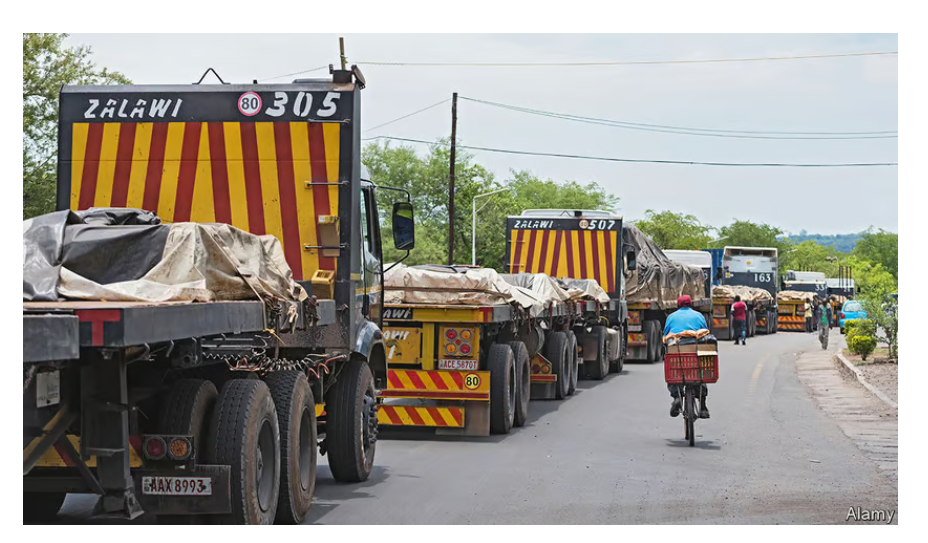
Thirdly, prioritizing intra-Africa trade will help address Africa’s long-standing extraversion that has led to a focus on infrastructure development of its sea-port regions as a result of its export orientation outside of Africa which has been to the detriment of land-locked countries and rural regions. Intra- Africa trade will reroute infrastructure linkages helping to build interconnecting roads and flight routes between Africa cities. It will also help lower the cost of transportation (6), tariffs and documentation across African borders which tend to be more expensive than those encountered to import goods from outside of Africa regions. This higher connectedness will engender a mind-set shift helping Africans to feel more comfortable collaborating with one another to solve their common problems and may eventually lead to the formation of a common market, economic and monetary union.
Although the benefits to Africa of focusing on the AfCFTA at this time have been extensively outlined, there are benefits that Africa may also derive from securing a free trade area agreement with the EU. Such benefits may include lower prices on imported finished goods which will reduce cost of living for many Africans. Further, it may increase the export of processed goods from Africa to Europe. If this agreement is structured to avoid dumping of European goods and capital into African countries at the expense of local entrepreneurs, it may indeed lead to economic gain to Africa by helping African industry improve its global competitiveness as a result of learning to produce goods for the European market that meets its stringent quality standards. Unfortunately, Africa is not in a position of strength to secure such an agreement at this time and will only end up with an agreement that allows Europe to dump its products into Africa as it has always done, leading to the further erosion of local industries in Africa and imperiling its development goals.

In conclusion, although some benefits may accrue to Africa from negotiating a free trade area with the EU, Africa is not currently in a position of strength to secure an agreement that preserves its own development interests i.e. protection of its developing industries, provision of jobs to its young people and avoiding economic volatility from its currently high reliance on commodity exports to extra-Africa trade partners. By focusing on consolidating intra-Africa trade through implementation of the AfCFTA, Africa will be able to integrate its local commodity supply chains, grow its local technology base, build globally competitive industries, create jobs for its teeming youths and strengthen its local currencies. This will create a strong base from which to negotiate free trade areas with other developed trade partners like the EU and to eventually learn to work with one another to create an Africa with a single currency, market and customs union where every African can move, trade and settle freely.
References:
- African Continental Free Trade Area Website: “About AfCFTA – Brief Overview”, Available https://au-afcfta.org/ , Accessed March 2024
- United Nations Conference on on Trade and Development (UNCTAD): “African Continental Free Trade Area: Policy and Negotiation Options for Trade in Goods”, Available https://shorturl.at/DILZ0 , Accessed March 2024
- The AfCFTA Secretariat, “A New Era of Trade in Africa – Accelerating AfCFTA Implementation”, Available https://shorturl.at/lnoA6 , Accessed March 2024
- UNCTAD: “Facts and Figures”, Available https://shorturl.at/kBG48 , Accessed March 2024
- Wikipedia, “Triangular Trade”, Available https://shorturl.at/flyTU , Accessed March 2024
- The Economist, “Why it costs so much to move goods around Africa”, Available March 26, 2022, https://shorturl.at/fmuVW , Accessed March 2024
Discover more from Adebayo Alonge
Subscribe to get the latest posts sent to your email.

